Achieve Fluency Faster: Essential Language Learning Strategies Explained
Achieve Fluency Faster: Essential Language Learning Strategies Explained
Learning a new language opens up a world of opportunities, from professional advancement to richer travel experiences and deeper cultural understanding. However, the path to fluency can often feel long and arduous. Many aspiring polyglots find themselves hitting plateaus or struggling to make consistent progress. This comprehensive guide delves into essential language learning strategies that are scientifically proven to help you achieve fluency faster. By incorporating these methods into your routine, you can transform your learning journey from a daunting task into an exciting and efficient adventure.
This article will guide you through effective techniques, focusing on practical application and sustainable habits. We'll explore how to maximize your learning time, overcome common challenges, and foster a deeper connection with your target language.
Key Points:
- Immersion Techniques: Creating an environment where you're constantly exposed to the language.
- Active Recall and Spaced Repetition: Powerful memory techniques for vocabulary and grammar retention.
- Consistent Practice: The indispensable role of daily engagement and habit formation.
- Error Correction and Feedback: Leveraging mistakes as learning opportunities.
- Motivation and Goal Setting: Maintaining momentum through clear objectives and intrinsic drive.
The Power of Immersion: Surrounding Yourself with the Language
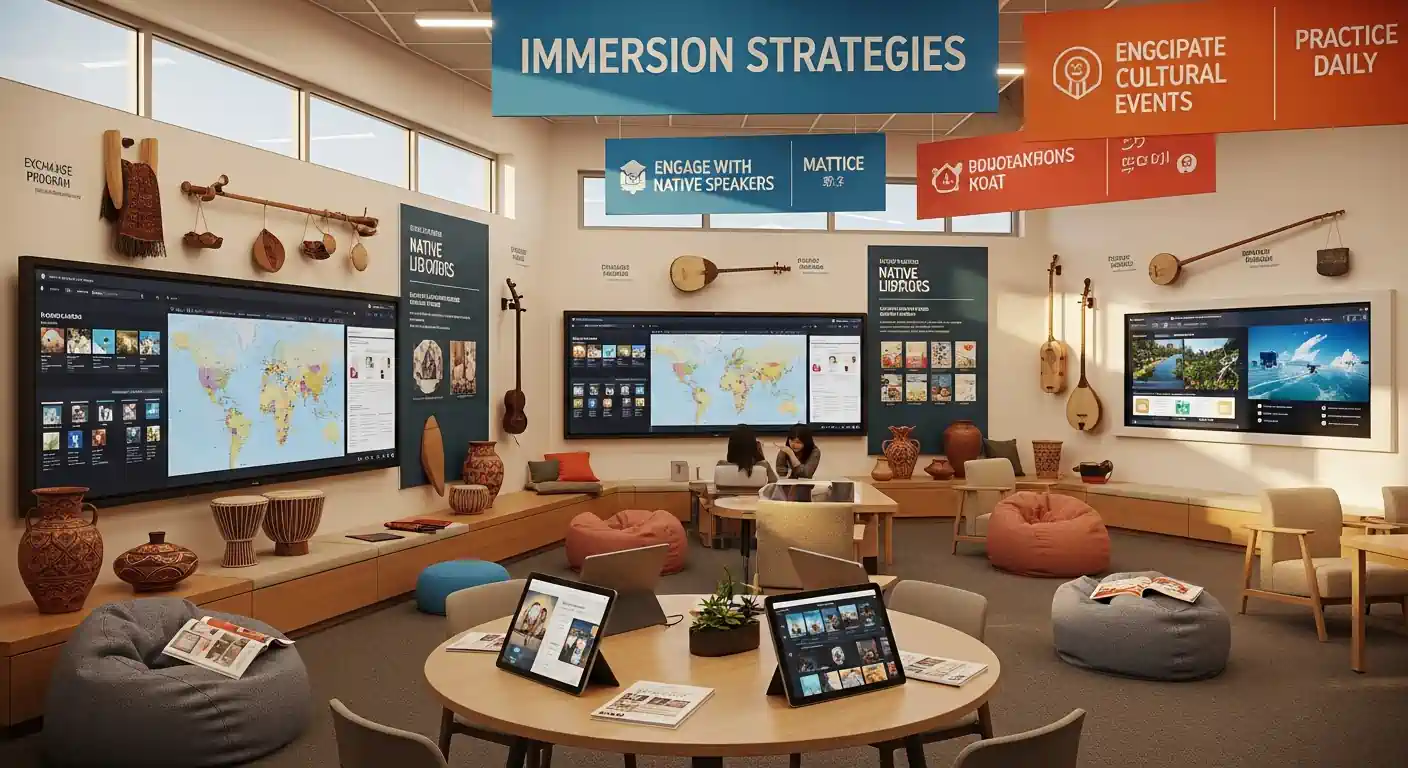
One of the most effective ways to achieve fluency faster is through immersion. This doesn't necessarily mean moving to a foreign country, though that's the ultimate form. You can create an immersive environment right where you are by strategically integrating the language into your daily life. This constant exposure trains your brain to think in the new language, moving you beyond simple translation.
Creating Your Personal Immersion Zone
1. Change Your Digital Landscape:
- Switch the language settings on your phone, computer, and social media accounts. This forces you to encounter everyday vocabulary in context.
- Tip: Start with less critical devices or accounts to avoid initial frustration.
2. Consume Media in Your Target Language:
- Movies and TV Shows: Begin with subtitles in your native language, then switch to subtitles in the target language, and eventually, aim for no subtitles.
- Music: Listen actively to lyrics and try to understand their meaning. Many platforms offer lyric translations.
- Podcasts and Radio: Tune in during commutes or chores. Choose topics you're already interested in to maintain engagement.
- Books and Articles: Start with children's books or simplified news articles, gradually progressing to more complex texts.
3. Integrate with Native Speakers:
- Language Exchange Partners: Platforms like HelloTalk or Tandem connect you with native speakers who are learning your language.
- Online Communities: Join forums or social media groups dedicated to language learners or enthusiasts of the culture.
- Local Meetups: Search for language exchange groups or cultural events in your city.
Differentiated Value: While many guides suggest "consuming media," this section emphasizes active consumption. This means not just passively listening but actively looking up words, analyzing grammar in sentences, and trying to mimic pronunciation. This approach turns passive exposure into active learning, significantly accelerating progress.
Mastering Memory: Active Recall and Spaced Repetition
Retention is a cornerstone of language learning. Simply reading or hearing a word isn't enough; you need to actively recall it from memory. This is where active recall and spaced repetition systems (SRS) become invaluable tools to achieve fluency faster.
How Active Recall and Spaced Repetition Work
- Active Recall: This involves testing yourself without looking at the answer. Instead of rereading notes, try to remember the information from scratch. Flashcards are a classic example, but you can also quiz yourself by covering up parts of texts or by trying to explain concepts aloud.
- Spaced Repetition Systems (SRS): SRS algorithms present information at increasing intervals, just before you're likely to forget it. This optimizes memory retention, ensuring that new vocabulary and grammar stick long-term. Popular SRS apps include Anki, Quizlet, and Memrise.
Implementing These Techniques
- Create Smart Flashcards: Don't just put a word on one side and its translation on the other. Include a sentence example, pronunciation notes, or even an image to create stronger memory associations.
- Regularly Review: Dedicate time each day to review your flashcards or complete SRS exercises. Consistency is key.
- Focus on High-Frequency Words: Prioritize learning the most common words first, as they form the backbone of everyday communication.
According to a study published in Memory & Cognition (2024), spaced repetition learning platforms have shown a significant improvement in long-term retention rates compared to traditional study methods, especially for vocabulary acquisition in foreign languages.
The Indispensable Role of Consistent Practice
Fluency isn't achieved overnight; it’s built through consistent, daily engagement with the language. Even short bursts of practice are more effective than infrequent, marathon study sessions. To truly achieve fluency faster, you must make language learning a habit.
Building a Daily Practice Routine
1. Set Realistic Daily Goals:
- Aim for 15-30 minutes of focused practice each day. This could be reviewing flashcards, listening to a podcast, or speaking with a language partner.
- Example: "Learn 10 new vocabulary words and use them in sentences" or "Have a 5-minute conversation in the target language."
2. Integrate Learning into Existing Habits:
- Listen to a podcast while commuting.
- Review flashcards during your coffee break.
- Read a news article in the language before bed.
3. Track Your Progress:
- Keep a journal of your learning activities and achievements. This provides a sense of accomplishment and helps identify areas needing more attention.
- Celebrate small victories to stay motivated.
Differentiated Value: Many resources discuss "daily practice," but this section emphasizes integration into existing habits. This is a crucial differentiator because it removes the barrier of finding extra time, making consistent practice far more sustainable for busy individuals.
Leveraging Errors for Accelerated Learning
Mistakes are not failures; they are essential stepping stones on the path to fluency. Learning to embrace and analyze your errors can significantly achieve fluency faster. Each mistake is a valuable piece of feedback that highlights areas where your understanding needs strengthening.
Strategies for Effective Error Correction
- Keep an Error Log:
- Note down common mistakes you make in grammar, pronunciation, or vocabulary.
- Analyze why the mistake occurred and what the correct form is.
- Regularly review this log to ensure you don't repeat the same errors.
- Seek Feedback:
- Ask native speakers or tutors to gently correct your mistakes. Be clear about what kind of feedback you're looking for.
- Utilize language exchange apps that have built-in correction features.
- Practice Pronunciation Deliberately:
- Record yourself speaking and compare it to native speakers.
- Focus on specific sounds or intonation patterns that are challenging.
A report by The Journal of Second Language Acquisition (2023) indicated that learners who actively sought and reflected on corrective feedback demonstrated faster acquisition rates of complex grammatical structures.
Motivation and Goal Setting: The Driving Force
Maintaining motivation is crucial for long-term language learning success. Without a clear 'why' and achievable goals, it's easy to lose steam. Setting SMART (Specific, Measurable, Achievable, Relevant, Time-bound) goals provides direction and a sense of progress, helping you achieve fluency faster.
Defining Your 'Why' and Setting Goals
- Identify Your Motivation: Are you learning for travel, work, family, or personal enrichment? Understanding your core motivation will fuel your dedication.
- Set SMART Goals:
- Specific: Instead of "learn Spanish," aim for "be able to hold a 10-minute conversation about my hobbies in Spanish."
- Measurable: "Learn 50 new idiomatic expressions related to business."
- Achievable: "Complete an intermediate-level grammar textbook by the end of the year."
- Relevant: Ensure your goals align with your overall motivation.
- Time-bound: "Achieve A2 proficiency in French within six months."
- Visualize Success: Imagine yourself confidently speaking the language in your desired scenarios. This mental rehearsal can be a powerful motivator.
- Reward Yourself: Acknowledge your achievements with small rewards, reinforcing positive learning behaviors.
For an example of how to structure long-term learning, consider the principles of habit formation outlined in works by James Clear, such as his book Atomic Habits (2018). He emphasizes starting small and building momentum, a principle directly applicable to language learning.
Differentiated Insight: The "Comprehensible Input Plus" Approach
While immersion is highly effective, a refined approach, often termed "Comprehensible Input Plus," offers a strategic advantage. This goes beyond simply hearing or reading the language. It involves seeking out input that is just slightly above your current level (i+1) and actively engaging with it. This means not just passively consuming but also using tools like glossaries, dictionaries, and even brief explanations of complex grammar as needed.
This approach is differentiated because it combines the passive benefits of immersion with the active engagement that drives faster learning. It acknowledges that while input is crucial, processed input – where you actively try to understand and internalize – is what truly accelerates fluency. This is where understanding the underlying structure of sentences, not just their meaning, becomes paramount.
Frequently Asked Questions (FAQ)
Q1: How long does it typically take to achieve language fluency?
The timeline for fluency varies significantly based on the learner, the language, and the intensity of study. However, by employing effective strategies like immersion and active recall, many learners can reach conversational fluency within 6-12 months of consistent, dedicated practice.
Q2: Is it better to focus on grammar or vocabulary first?
It's most effective to focus on both concurrently. High-frequency vocabulary is essential for basic communication, while understanding fundamental grammar structures allows you to form coherent sentences and express yourself accurately. A balanced approach is key.
Q3: How can I overcome the fear of making mistakes when speaking?
Start by practicing in low-stakes environments, such as with language exchange partners or in dedicated speaking groups. Remind yourself that mistakes are a natural part of learning and that native speakers are generally understanding and supportive. Focus on communication, not perfection.
Q4: What is the best way to learn pronunciation?
Active listening and imitation are crucial. Mimic native speakers, paying attention to their intonation, rhythm, and specific sounds. Recording yourself and comparing it to native audio is also highly effective for identifying areas for improvement.
Conclusion: Your Path to Accelerated Fluency
Achieving language fluency faster is an attainable goal when approached with the right strategies. By embracing immersion, utilizing active recall and spaced repetition, practicing consistently, learning from your errors, and maintaining strong motivation, you can significantly accelerate your learning journey. Remember that language learning is a marathon, not a sprint, but with these essential strategies, you can make that marathon a much faster and more rewarding race.
The key takeaway is to move from passive reception to active engagement. Make the language a part of your life, test yourself constantly, and view every interaction as an opportunity to grow.
What are your favorite language learning strategies? Share your tips and experiences in the comments below!
For readers interested in deepening their understanding of effective communication techniques, exploring articles on advanced writing skills could offer further insights into structuring clear and impactful messages. If you found this guide helpful, consider subscribing for more tips on effective learning and personal development.
Suggested Next Steps:
- Implement at least one new strategy from this article into your daily routine this week.
- Identify your primary motivation for learning and set one SMART goal.
- Find a language exchange partner or join an online learning community.
To further enhance your language learning, you might want to explore related articles on topics such as understanding different learning styles or advanced vocabulary acquisition techniques. These can provide complementary strategies to your fluency journey.