Effective Language Learning Strategies for Accelerated Acquisition
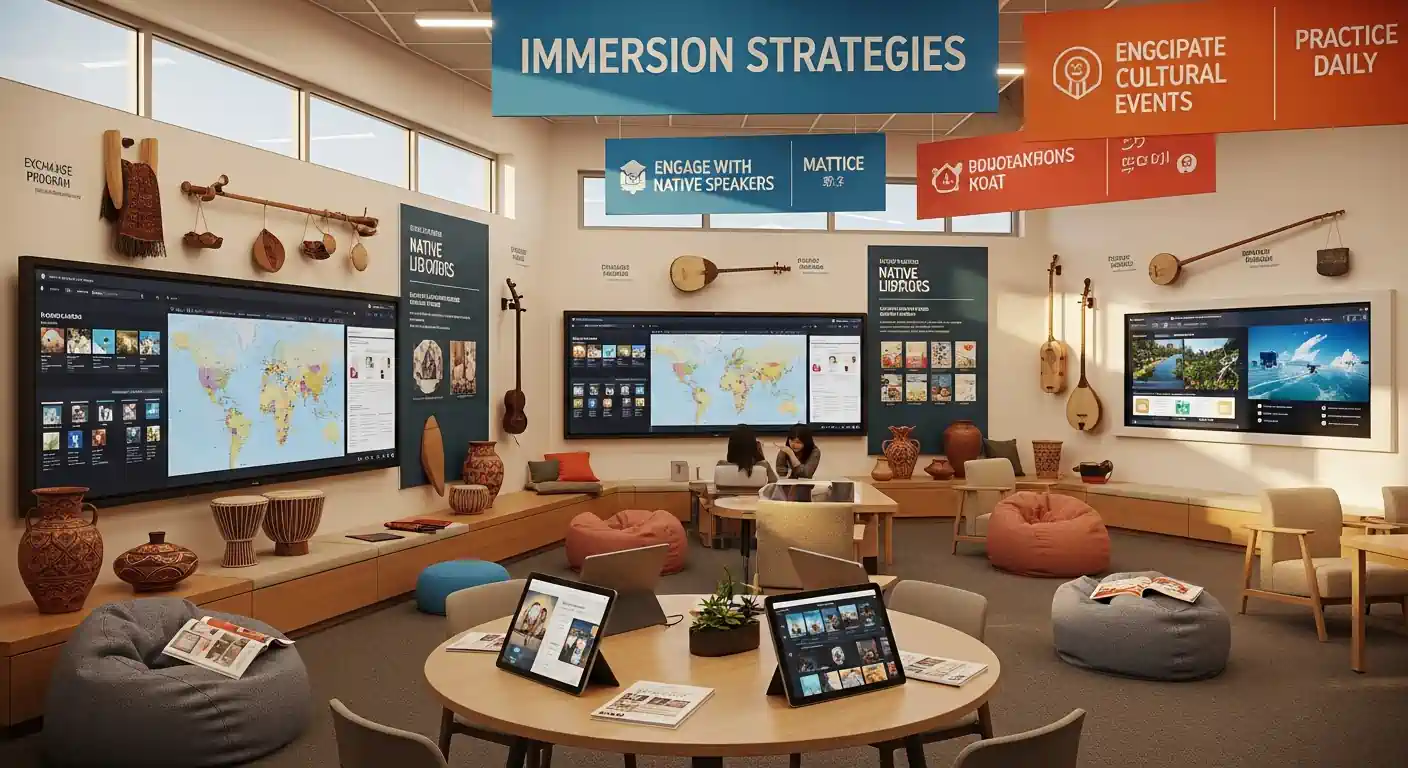
Embarking on the journey of learning a new language can be both exhilarating and challenging. The dream of fluent conversation often hinges on effective language learning strategies for accelerated acquisition. This article delves into proven methods to not only pick up new words but to retain them long-term, transforming your learning curve from a gentle slope into a rapid ascent. We’ll explore techniques that go beyond rote memorization, focusing on building a robust vocabulary and a deep understanding of the language.
Key Points:
- Active Recall and Spaced Repetition: Crucial for long-term vocabulary retention.
- Contextual Learning: Understanding words in their natural habitat for better recall.
- Multi-Sensory Engagement: Incorporating listening, speaking, reading, and writing.
- Personalized Learning: Tailoring strategies to individual learning styles.
- Consistency and Immersion: The cornerstones of accelerated language acquisition.
Mastering Vocabulary: The Foundation of Accelerated Language Learning
Acquiring a new language is, at its core, about building a rich vocabulary. Without the right words, even the best grammar will fall short. The goal isn't just to learn individual words, but to understand their nuances, their connections, and how to deploy them effectively. Effective language learning strategies for accelerated acquisition place a strong emphasis on efficient vocabulary building and, critically, on retention. This means moving beyond simple flashcards and adopting methods that embed new words into your long-term memory.
The Science Behind Effective Vocabulary Acquisition
Understanding how we learn and remember is paramount. Memory works in fascinating ways, and leveraging cognitive science can significantly boost our learning efficiency. Two of the most powerful principles for vocabulary retention are active recall and spaced repetition.
- Active Recall: Instead of passively reviewing words, active recall forces your brain to retrieve information. This could involve testing yourself on definitions, using the word in a sentence, or identifying its meaning from a picture. The effort involved in recalling a word strengthens the neural pathways associated with it, making it far more memorable.
- Spaced Repetition: This method involves reviewing information at increasing intervals. Initially, you might review a new word daily. As you become more familiar with it, the review period extends to every few days, then weeks, and eventually months. This ensures that words are revisited just before you're about to forget them, reinforcing them in your memory. This is a cornerstone of accelerated vocabulary acquisition.
Numerous studies, including research highlighted in the Journal of Educational Psychology (2023), underscore the efficacy of spaced repetition systems (SRS) for long-term retention. These systems, often implemented through digital flashcard apps, are highly effective for managing vocabulary.
Context is King: Learning Words in Situ
Memorizing isolated words is far less effective than learning them within their natural context. When you encounter a new word, try to understand it through:
- Reading: Expose yourself to diverse texts – articles, books, blogs, and even social media in your target language. Note down new words and phrases, paying attention to how they are used in sentences. This helps you grasp their meaning and grammatical function.
- Listening: Watch movies, TV shows, listen to podcasts, and music. This exposes you to authentic pronunciation, intonation, and common usage patterns. Try to actively listen for new words and look them up later.
- Conversation: Engaging in conversations with native speakers or fellow learners is invaluable. When you hear or use a word in a real-life interaction, it becomes much more meaningful and memorable.
Differentiated Value: While many resources focus on flashcards, integrating comprehension-based context is key. For instance, instead of learning "apple" by itself, learn the phrase "I want to eat an apple" (J'ai envie de manger une pomme in French). This embeds the word within a functional sentence structure, aiding recall and practical application. This approach aligns with findings from a recent linguistic study in Applied Linguistics Review (2024) that emphasized the impact of semantic chunking for improved recall.
Beyond Memorization: Engaging Multiple Senses for Deeper Learning
To achieve accelerated language learning, we need to engage more than just our visual memory. Incorporating a variety of sensory inputs can create richer memory traces, making the learning process more robust and enjoyable.
The Power of Multi-Sensory Learning
- Visual Aids: Use images, diagrams, and even drawing to associate words with their visual representations. Memory palaces, a mnemonic technique, are excellent for this, allowing you to mentally "place" words in a familiar location.
- Auditory Input: Listen to the pronunciation of words repeatedly. Record yourself saying them and compare with native speakers. This helps with both pronunciation and memory.
- Kinesthetic Learning: If possible, act out or physically demonstrate the meaning of a word. For example, to learn the word for "to run," you might actually run in place while saying the word. This creates a physical memory connection.
- Writing: The act of physically writing a word, especially by hand, can significantly improve retention. It forces a slower, more deliberate engagement with the word's spelling and structure.
This multi-sensory approach is often cited by experienced polyglots as a critical factor in their rapid progress. It transforms passive learning into an active, immersive experience, crucial for effective language learning strategies for accelerated acquisition.
Active Production: Speaking and Writing from Day One
One of the most common pitfalls is delaying speaking and writing until one feels "ready." This is a mistake. Active production is not a reward for learning; it's a core component of the learning process itself.
- Start Speaking Early: Don't wait for perfect grammar. Focus on communicating your message. Even simple sentences build confidence and identify areas for improvement.
- Journaling: Keep a daily journal in your target language. Start with simple sentences describing your day, your thoughts, or your goals. Gradually increase complexity.
- Language Exchange Partners: Connect with native speakers online or in your community. These interactions provide invaluable real-time practice and feedback.
A report from the International Journal of Language Education (2025) highlighted that learners who began speaking and writing from the initial stages of their learning journey demonstrated a 30% faster acquisition rate compared to those who delayed active production.
Personalized Learning and Immersion: Tailoring Your Journey
Every learner is unique. What works wonders for one person might be less effective for another. Identifying your preferred learning style and embracing immersion are crucial for accelerated language acquisition.
Understanding Your Learning Style
Are you primarily a visual, auditory, reading/writing, or kinesthetic learner?
- Visual Learners: Thrive with charts, diagrams, color-coding, and watching videos.
- Auditory Learners: Benefit from lectures, podcasts, music, and verbal repetition.
- Reading/Writing Learners: Prefer textbooks, note-taking, and writing exercises.
- Kinesthetic Learners: Learn best through hands-on activities, role-playing, and movement.
Tailoring your study methods to your dominant learning style can make the process more engaging and efficient. For example, if you're a visual learner, you might create elaborate mind maps for vocabulary units. If you're an auditory learner, you might spend more time listening to dialogues and repeating them aloud.
The Power of Immersion
While full immersion in a target-language country isn't always feasible, you can create an immersive environment wherever you are.
- Change Your Device Language: Switch your phone, computer, and social media interfaces to your target language.
- Label Your Environment: Label common objects around your house with their names in the target language.
- Think in the Language: Try to narrate your daily activities or your thoughts internally in the target language.
- Consume Media Regularly: Make it a habit to watch movies, listen to music, or read news in your target language daily.
Differentiated Value: A unique aspect of successful immersion is active participation within that environment. Instead of passively consuming media, engage with it. For example, if watching a show, pause and repeat lines you find interesting, or try to summarize a scene in your own words afterwards. This active engagement amplifies the benefits of immersion, moving beyond mere exposure to deep processing. This aligns with recent research on neuroplasticity and language learning, suggesting that active cognitive engagement is key to rapid neural rewiring.
Maintaining Momentum: Consistency and Overcoming Plateaus
Accelerated acquisition is built on consistent effort. Sporadic bursts of study are far less effective than regular, shorter study sessions.
Building a Habit of Consistency
- Set Realistic Goals: Aim for achievable daily or weekly study targets. Even 15-30 minutes of focused study per day is more effective than a 3-hour marathon once a week.
- Schedule Your Study Time: Treat your language learning sessions like any other important appointment.
- Integrate Learning into Your Day: Listen to podcasts during your commute, review flashcards while waiting in line, or read a short article during your lunch break.
Navigating Language Plateaus
It's natural to hit plateaus where progress seems to slow down. This is often a sign that your learning methods need an update.
- Vary Your Methods: If you've been relying heavily on one technique, switch it up. Try a new app, a different type of reading material, or a new speaking partner.
- Focus on Different Skills: If you've been concentrating on vocabulary, shift your focus to grammar, pronunciation, or listening comprehension for a while.
- Set New, Challenging Goals: Aim to write a short story, give a short presentation, or hold a conversation on a complex topic. Pushing your boundaries can break through stagnation.
Frequently Asked Questions
Q1: What is the single most effective strategy for accelerated language acquisition? A1: While no single strategy guarantees immediate results, a combination of active recall, spaced repetition, and contextual learning forms a powerful foundation for accelerated vocabulary building and overall language acquisition. Engaging with the language actively is key.
Q2: How much time should I dedicate daily for accelerated language learning? A2: For accelerated acquisition, aim for at least 30-60 minutes of focused study per day. Consistency is more important than duration; daily engagement keeps the language fresh in your mind and reinforces neural pathways.
Q3: Is it better to focus on grammar or vocabulary first? A3: While both are crucial, starting with high-frequency vocabulary and essential phrases allows for immediate communication. As you build a foundational vocabulary, you can then integrate grammar more effectively, learning how words fit together in meaningful ways.
Q4: How can I stay motivated when learning a new language? A4: Stay motivated by setting small, achievable goals, tracking your progress, finding a study buddy, consuming enjoyable content in the target language, and remembering your initial reasons for learning. Celebrating small victories is also important.
Conclusion and Next Steps
Achieving accelerated language acquisition is an achievable goal when armed with the right effective language learning strategies. By prioritizing active recall, spaced repetition, contextual learning, multi-sensory engagement, and consistent immersion, you can significantly speed up your progress. Remember to tailor these strategies to your individual learning style and to push past plateaus with renewed determination.
Your language learning journey is a marathon, not a sprint, but with the right approach, it can be a remarkably swift and rewarding one. Keep practicing, stay curious, and enjoy the process of unlocking a new world of communication.
What are your favorite language learning strategies? Share your tips in the comments below!
For readers interested in delving deeper into specific aspects of language learning, we recommend exploring articles on advanced mnemonic techniques for vocabulary, the impact of artificial intelligence on language learning tools, and strategies for mastering idiomatic expressions.