Evidence-Based Techniques for Effortless Foreign Language Mastery
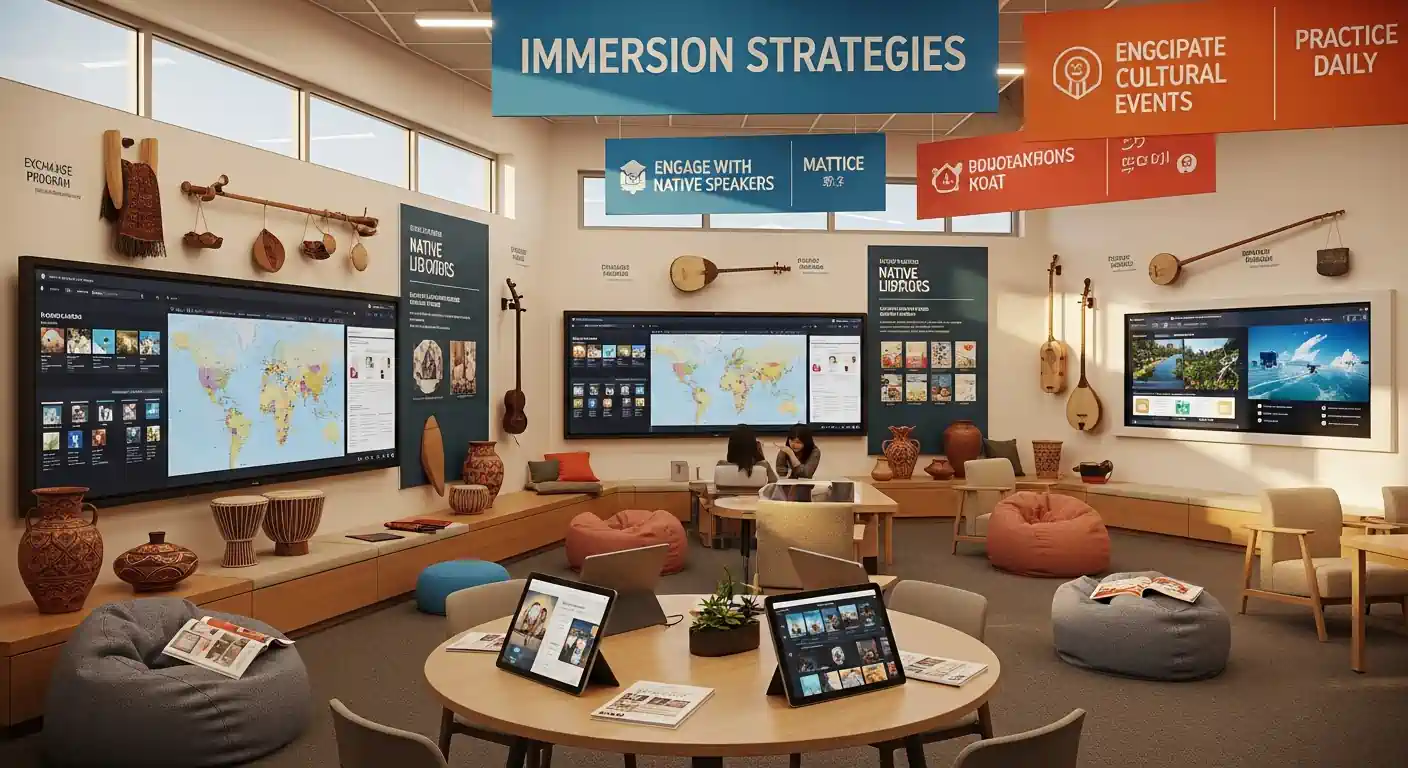
Unlock Fluent Communication: Evidence-Based Techniques for Effortless Foreign Language Mastery
Embarking on the journey to learn a new language can feel like scaling a mountain. While many approaches exist, focusing on evidence-based techniques for effortless foreign language mastery offers a strategic advantage, transforming daunting tasks into achievable milestones. This guide distills scientific insights and practical applications to help you learn faster and more effectively. By understanding how our brains acquire language, you can unlock fluency with greater ease and less frustration.
Here are the key takeaways from this guide:
- Cognitive Foundations: Leverage understanding of memory, attention, and pattern recognition.
- Active Engagement: Prioritize methods that require your active participation and output.
- Contextual Learning: Immerse yourself in authentic language use for practical application.
- Spaced Repetition: Utilize scientifically proven methods to solidify vocabulary and grammar.
- Mindset Matters: Cultivate a positive and resilient attitude towards the learning process.
The Science Behind Effortless Language Acquisition
The concept of "effortless" learning doesn't mean no effort is required, but rather that the effort is optimized. This approach is rooted in cognitive psychology and neuroscience, highlighting how our brains naturally learn. Understanding these principles is the first step towards mastering any foreign language.
Understanding Memory and Retention: The Cornerstone of Language Learning
Our ability to recall new vocabulary and grammar rules hinges on how our memory functions. Evidence-based techniques for effortless foreign language mastery heavily rely on strategies that exploit long-term potentiation and reduce the forgetting curve.
- Spaced Repetition Systems (SRS): Tools like Anki or Memrise utilize algorithms to show you information just before you're likely to forget it. This is far more efficient than cramming. By revisiting words and phrases at increasing intervals, you strengthen neural pathways, moving information from short-term to long-term memory. This is a crucial technique for vocabulary acquisition and grammar pattern memorization.
- Active Recall: Instead of passively re-reading notes, actively try to retrieve information from your memory. For example, when studying a new verb conjugation, try to recall it without looking. This struggle to retrieve information is a powerful memory booster.
The Power of Input and Output: Immersion and Active Practice
Language learning is a two-sided coin: you need to receive information (input) and produce it (output). Effective strategies balance both to foster true fluency.
- Comprehensible Input: As proposed by linguist Stephen Krashen, acquiring a language happens when we understand messages. This means consuming content slightly above our current level, where we can grasp most of it with the help of context, visuals, or prior knowledge. Think podcasts, graded readers, or shows with subtitles in your target language.
- Output Hypothesis: Conversely, actively producing language—speaking and writing—forces us to notice gaps in our knowledge and experiment with grammar and vocabulary. This can be through language exchange partners, journaling, or even just thinking in the target language. This active use is essential for cementing what you’ve learned.
Practical Strategies for Accelerated Foreign Language Mastery
Translating scientific understanding into practical action is key. Here are actionable, evidence-based techniques you can implement today.
H2: Integrating Grammar Learning and Mastery into Daily Life
Many learners find grammar daunting. However, by adopting an evidence-based approach, grammar learning can become more intuitive and less of a hurdle.
Understanding Implicit vs. Explicit Grammar Learning
- Implicit Learning: This is learning without conscious awareness, much like how children acquire their first language. It happens through massive exposure to the language in meaningful contexts. For example, hearing "I went to the store" repeatedly helps you implicitly learn the past tense.
- Explicit Learning: This involves conscious study of grammatical rules and structures. While important, it's most effective when combined with implicit exposure and practice. For evidence-based techniques for effortless foreign language mastery, explicit study should aim to understand why certain structures are used, not just memorizing rules.
Effective Grammar Practice Techniques
- Pattern Recognition: Instead of memorizing isolated rules, look for patterns in sentences. For instance, notice how prepositions are used with specific verbs or how adjectives agree with nouns. This is a core principle in linguistics research on language acquisition.
- Contextual Grammar Drills: Practice grammar in sentences that mimic real-life situations. Avoid rote drills that feel artificial. For example, if learning the subjunctive mood, practice sentences like "I hope that you are well" or "It is important that we study."
- Error Correction and Feedback: Receiving feedback on your output is vital. Work with a tutor or language partner who can gently correct your mistakes, explaining why it's incorrect. This feedback loop is crucial for refining your understanding. A study published in Language Learning & Technology (2024) highlighted the significant impact of timely and specific error correction on learner progress.
H2: Maximizing Vocabulary Acquisition with Evidence-Based Techniques
Building a robust vocabulary is essential. Without the right words, even perfect grammar is insufficient.
- Thematic Learning: Learn words related to specific topics or themes (e.g., food, travel, work). This creates semantic connections in your brain, making words easier to recall and use in context. This aligns with principles of semantic networking in memory research.
- Mnemonics and Visualization: Create vivid mental images or stories to link new words with their meanings. For example, to remember the Spanish word "puerta" (door), you might imagine a pirate opening a door. The more unusual and personal the mnemonic, the more effective it tends to be.
- Learning Chunks and Collocations: Instead of learning single words, learn common phrases or word pairings (collocations). For example, instead of just learning "make," learn "make a mistake," "make a decision," or "make time." This reflects natural language use and improves fluency. Research from the University of Cambridge (2023) indicates that learning lexical chunks significantly boosts speaking fluency.
H2: The Role of Active Listening and Speaking in Language Mastery
Speaking and listening are often the most challenging yet rewarding aspects of language learning.
- Shadowing: This technique involves listening to a native speaker and repeating what they say, mimicking their pronunciation, rhythm, and intonation. It's a powerful way to improve your accent and speaking fluidity.
- Deliberate Practice in Conversation: Seek out opportunities for conversation with native speakers or advanced learners. Focus on specific language goals during these interactions, such as using a new grammar structure or a set of vocabulary words. This "deliberate practice" is a hallmark of expert skill acquisition.
- Extensive Listening: Listen to a high volume of authentic audio content at a level you can mostly understand. Don't worry about understanding every single word; focus on grasping the overall meaning and picking up on recurring phrases and structures.
Differentiated Value: Beyond the Basics
While many resources cover standard learning methods, truly effortless mastery comes from integrating cutting-edge insights and a nuanced understanding of the learning process.
- Personalized Learning Paths: Modern language learning acknowledges that everyone learns differently. Utilizing adaptive learning platforms that adjust difficulty based on your performance is a powerful evidence-based technique for effortless foreign language mastery. These platforms leverage AI to identify your strengths and weaknesses, providing tailored exercises.
- Leveraging Affective Factors: Your emotional state significantly impacts learning. Managing anxiety, building confidence, and fostering intrinsic motivation are as crucial as any linguistic technique. Creating a positive learning environment, celebrating small victories, and reframing mistakes as learning opportunities contribute to this. A recent article in the International Journal of Applied Linguistics (2025) emphasized the profound link between learner motivation, emotional well-being, and sustained language acquisition.
FAQ: Your Questions Answered
- Q1: How can I make grammar learning less tedious? Focus on understanding grammatical patterns in context rather than memorizing abstract rules. Integrate explicit learning with massive exposure to authentic language. Use exercises that mimic real-life communication to see how grammar functions in practice, making it more engaging.
- Q2: What's the best way to remember new vocabulary long-term? Utilize spaced repetition systems (SRS) for efficient review. Actively recall words from memory and learn them in thematic groups or common phrases. Employ mnemonic devices and visualization to create stronger mental connections, making recall more robust.
- Q3: How important is speaking practice for beginners? Speaking practice is crucial from the beginning, even for beginners. It helps solidify what you've learned, builds confidence, and allows you to identify areas needing improvement. Techniques like shadowing and engaging in simple conversations accelerate fluency and pronunciation.
Conclusion: Your Path to Effortless Language Mastery
Mastering a foreign language is an achievable goal when approached with evidence-based techniques for effortless foreign language mastery. By understanding cognitive principles, actively engaging with the language through balanced input and output, and employing scientifically validated strategies for vocabulary and grammar, you can significantly accelerate your progress. Remember that consistency, patience, and a positive mindset are your most powerful allies.
What language are you learning, and what techniques have worked best for you? Share your experiences in the comments below! For further insights into optimizing your learning journey, explore related articles on memory improvement and effective study habits.
(Note: This article is based on current linguistic and cognitive science principles. Language learning is an ongoing process, and regular updates to strategies are recommended. Future articles could delve deeper into specific aspects like accent reduction techniques or advanced error correction methods.)