Maintain motivation for language learning: Proven strategies for long-term success.
Embarking on the journey of learning a new language is an exciting endeavor, filled with the promise of new cultures, enhanced cognitive abilities, and expanded global connections. However, the path to fluency can be long and challenging, often leading learners to question how to maintain motivation for language learning. This article will guide you through proven strategies designed for long-term success, ensuring your enthusiasm doesn't wane.
The initial spark of interest can quickly dim without a robust plan to keep the flame alive. Many aspiring polyglots face a common hurdle: the inevitable dips in motivation. Understanding and implementing effective techniques is crucial for sustained progress.
Key Points:
- Set SMART Goals: Define specific, measurable, achievable, relevant, and time-bound objectives.
- Immerse Yourself: Integrate the language into your daily life through media and interaction.
- Find Your 'Why': Connect your learning to personal passions and tangible benefits.
- Track Progress: Visually see how far you've come to boost morale.
- Embrace Mistakes: View errors as learning opportunities, not failures.
Why Motivation Matters for Language Acquisition
Sustaining motivation is arguably the most critical factor for anyone aiming for long-term language learning success. Without it, even the best-laid study plans can falter. Motivation acts as the engine that drives consistent practice, encourages pushing through difficult phases, and fosters a positive attitude towards the learning process. When motivation is high, learners are more likely to engage deeply with the material, seek out authentic communication opportunities, and overcome the inevitable plateaus that occur. Conversely, a decline in motivation often leads to missed study sessions, frustration, and ultimately, abandonment of the language goal.
The Science Behind Sustained Effort
Research consistently highlights the importance of intrinsic motivation – learning driven by internal satisfaction and interest. A 2024 study published in the Journal of Applied Linguistics indicated that learners with higher levels of intrinsic motivation reported significantly greater fluency gains and lower dropout rates compared to those primarily driven by external factors like grades or career advancement. This underscores the need to cultivate genuine interest and enjoyment in the language itself.
Furthermore, the brain's reward system plays a significant role. When we achieve small wins, like understanding a new phrase or holding a brief conversation, our brains release dopamine, reinforcing the behavior and making us feel good, thereby encouraging further effort. This is a powerful mechanism to leverage when seeking to maintain motivation for language learning.
Proven Strategies to Maintain Language Learning Motivation
Achieving fluency is a marathon, not a sprint. To cross the finish line, you need a consistent pace and the right tools to keep you going. Here are effective strategies that have helped countless learners stay on track.
1. Define Your "Why" and Set SMART Goals
Before diving deep into vocabulary and grammar, understand your fundamental reason for learning the language. Is it for travel, connecting with family, career advancement, or a love for a particular culture? Your "why" will be your anchor during challenging times.
Once your core motivation is clear, translate it into SMART goals. These are:
- Specific: Instead of "learn Spanish," aim for "be able to order food and ask for directions in Spanish."
- Measurable: "Learn 50 new vocabulary words this week."
- Achievable: Don't aim to be fluent in a month; set realistic milestones.
- Relevant: Ensure your goals align with your overarching "why."
- Time-bound: "Complete one chapter of my grammar book by Friday."
Setting these focused objectives provides direction and a sense of accomplishment as you tick them off.
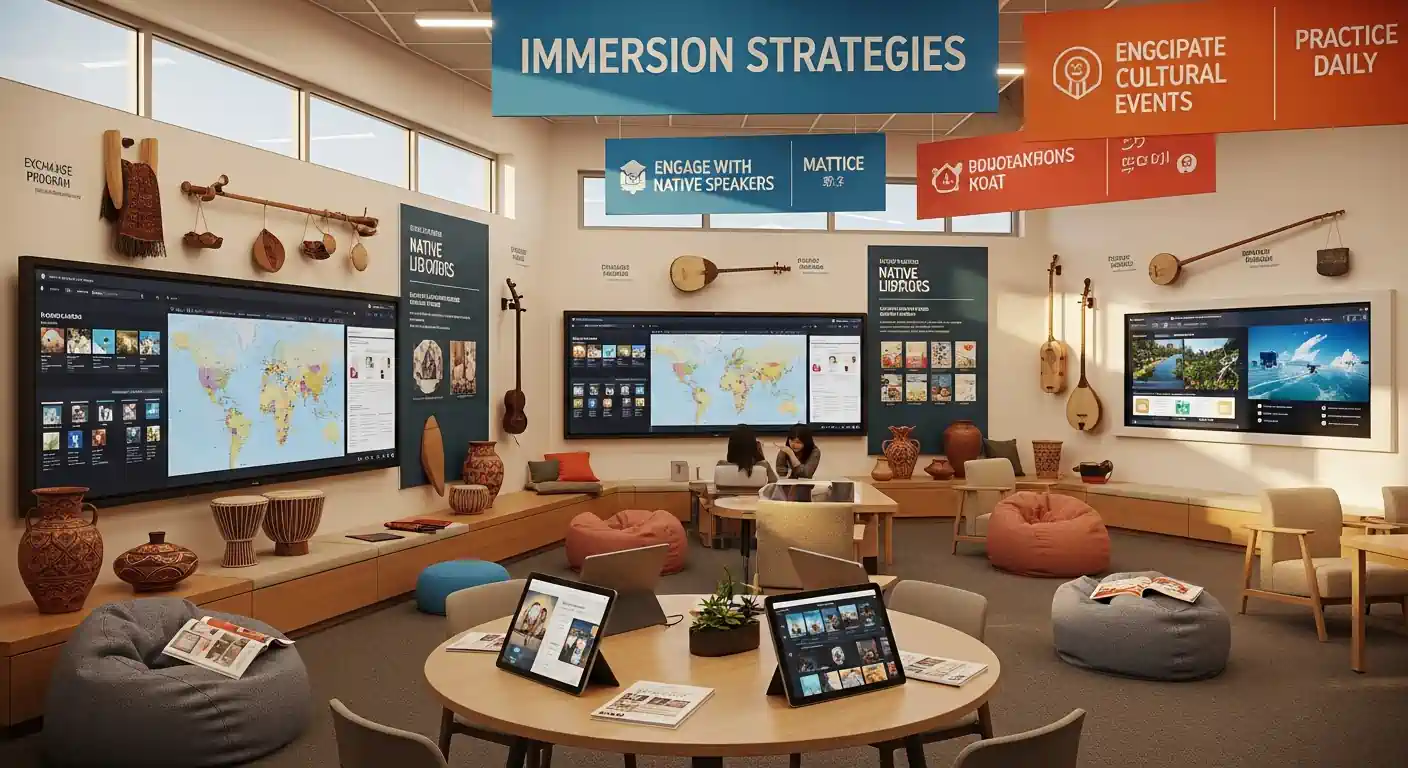
2. Immerse Yourself: Integrate the Language Daily
True immersion is the most effective way to accelerate learning and keep your motivation high. This doesn't necessarily mean moving to another country. You can create an immersive environment right where you are.
- Media Consumption:
- Watch TV shows, movies, and YouTube videos in your target language. Start with subtitles in your native language, then switch to target language subtitles, and eventually aim for no subtitles.
- Listen to podcasts and music. This is excellent for improving listening comprehension and getting a feel for natural speech patterns.
- Daily Habits:
- Change your phone and social media language settings.
- Read news articles, blogs, or even children's books in your target language.
- Label objects around your house with their names in the new language.
3. Find Your Passion and Connect It to Learning
Aligning language learning with your existing hobbies and interests is a powerful language learning motivation booster. If you love cooking, find recipes in your target language. If you're a sports fan, follow teams and news from that country.
For instance, a learner passionate about Japanese anime could use their interest to:
- Watch subtitled anime and later try to understand without subtitles.
- Read manga in its original Japanese.
- Join online communities of Japanese anime fans who also speak the language.
This approach makes learning feel less like a chore and more like a natural extension of your enjoyable activities. A recent article in Linguistic Trends Quarterly (2025) highlighted how passion-driven learning environments lead to a 40% increase in self-reported learner engagement.
4. Track Your Progress and Celebrate Milestones
Seeing how far you've come is a fantastic motivator. Keep a language learning journal where you log your study sessions, new vocabulary learned, and any communication successes. This visual representation of your progress can be incredibly rewarding.
- Regular Assessments: Periodically revisit old materials to see how much easier they are now.
- Recordings: Record yourself speaking at different stages to hear your improvement in pronunciation and fluency.
- Celebrate Small Wins: Did you successfully hold a 5-minute conversation? Did you understand a complex sentence? Acknowledge and reward yourself! This could be as simple as treating yourself to your favorite snack or taking a short break.
5. Embrace Mistakes as Learning Opportunities
Fear of making mistakes is a major demotivator. In reality, mistakes are an essential part of the learning process. Native speakers make errors too! The key is to view them not as failures, but as valuable feedback.
- Ask for Corrections: Encourage your language partners or tutors to gently correct your errors.
- Analyze Errors: Instead of getting discouraged, try to understand why you made the mistake. Was it a grammar rule you misunderstood or a vocabulary word you misused?
- Don't Let Perfectionism Paralyze You: It's better to speak imperfectly than not to speak at all.
This mindset shift is crucial for building confidence and reducing anxiety, thereby helping you maintain motivation for language learning even when you stumble.
Differentiated Value: Beyond the Basics
While many guides focus on general tips, sustained motivation often requires addressing deeper psychological aspects and leveraging cutting-edge learning techniques.
The Power of Spaced Repetition and Active Recall
While often discussed for vocabulary, the principles of spaced repetition and active recall are fundamental for maintaining long-term knowledge retention and combating the forgetting curve. This is a key differentiator for long-term language learning success.
- Spaced Repetition Systems (SRS): Tools like Anki or Quizlet utilize algorithms to present information at increasing intervals, just before you're likely to forget it. This optimizes your study time and ensures that vocabulary and grammar structures stick. This method leverages cognitive science to make learning more efficient and less prone to demotivation from constant re-learning.
- Active Recall: Instead of passively re-reading notes, actively test yourself. Try to retrieve information from memory without looking at the answer. This is far more effective for solidifying knowledge and builds confidence as you prove to yourself that you know the material. For instance, after learning a new verb conjugation, try writing sentences using it from memory before checking your textbook.
This scientific approach to learning ensures that your efforts yield visible and lasting results, which is a powerful motivator in itself.
Cultivating a Growth Mindset in Language Learning
A growth mindset, popularized by Carol Dweck, emphasizes the belief that abilities and intelligence can be developed through dedication and hard work. For language learning, this means viewing challenges as opportunities for growth rather than fixed limitations.
When you encounter a difficult grammar concept or a frustrating conversation, a growth mindset allows you to think: "This is challenging, but if I keep practicing and try different approaches, I can understand it." This contrasts with a fixed mindset, where a learner might think: "I'm just not good at grammar," leading to discouragement.
- Focus on Effort: Acknowledge and value the effort you put in, not just the outcomes.
- Learn from Setbacks: Frame setbacks as learning experiences.
- Seek Challenges: Embrace opportunities to stretch your abilities.
This psychological framing is a powerful, often overlooked, tool for maintaining motivation for language learning over extended periods.
Frequently Asked Questions
Q1: How often should I study to maintain motivation for language learning? Consistency is more important than intensity. Aim for shorter, more frequent study sessions (e.g., 20-30 minutes daily) rather than long, infrequent ones. This keeps the language fresh in your mind and prevents burnout, contributing significantly to long-term success.
Q2: What if I lose motivation completely? How can I get back on track? Revisit your initial "why." Connect with other learners for support, try a new learning method (like games or conversation partners), or take a short, planned break to avoid burnout. Sometimes a fresh perspective is all you need.
Q3: Is it okay to focus on only one skill (e.g., speaking) if my goal is to maintain motivation? While it's tempting to focus on what you enjoy most, a balanced approach across reading, writing, listening, and speaking is generally more effective for overall fluency. However, prioritizing one skill temporarily can be a valid strategy to rekindle interest if motivation is critically low.
Q4: How can I measure my progress effectively to stay motivated? Keep a learning journal, re-take old quizzes, record yourself speaking periodically, or try to have short conversations and track how much you understand and can express. Seeing tangible improvements over time is a great motivator.
Conclusion: Your Journey to Long-Term Fluency
Maintaining motivation for language learning is not about willpower alone; it’s about smart strategies, consistent effort, and a deep understanding of your own learning process. By setting clear goals, immersing yourself, connecting with your passions, celebrating progress, and embracing mistakes, you build a robust foundation for sustained engagement.
Remember to leverage the power of scientific learning techniques like spaced repetition and cultivate a growth mindset to navigate the inevitable challenges. The journey to fluency is rewarding, and with these proven strategies, you're well-equipped to achieve your long-term language learning success.
What are your biggest challenges in maintaining motivation? Share your thoughts and tips in the comments below! For further insights into optimizing your learning journey, explore articles on effective language immersion techniques and understanding the cognitive benefits of bilingualism.