Mastering Language Learning: Evidence-Based Strategies for Fluency Success
Mastering Language Learning: Evidence-Based Strategies for Fluency Success
Embarking on the journey of learning a new language is an exciting endeavor, promising new perspectives, cultural immersion, and enhanced cognitive abilities. However, the path to true fluency can often feel challenging, paved with plateaus and moments of doubt. This article delves into evidence-based strategies designed to equip you with the most effective tools for mastering language learning and achieving sustainable fluency success. By understanding how our brains acquire language and applying scientifically validated techniques, you can transform your learning experience from a struggle into a rewarding, consistent progress.
This guide will equip you with proven methods to accelerate your language acquisition. We’ll explore the power of spaced repetition, the importance of active recall, and how to leverage authentic materials for immersive learning. Prepare to unlock your potential and achieve your language goals faster and more effectively.
Key Points:
- Spaced Repetition Systems (SRS): Optimize memorization for vocabulary and grammar.
- Active Recall: Test yourself frequently to strengthen memory traces.
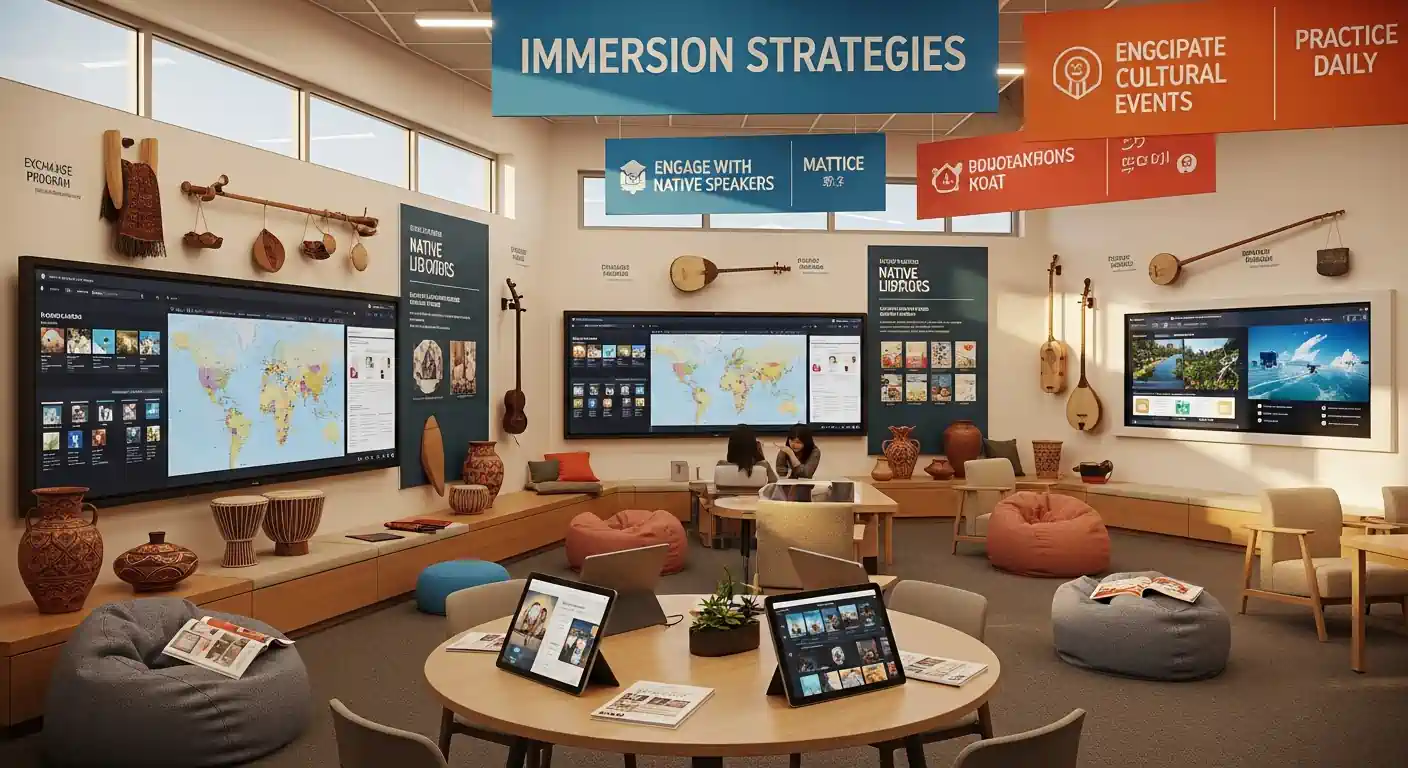
- Immersion: Surround yourself with the target language through authentic materials.
- Consistent Practice: Regular, focused study is crucial for long-term retention.
- Meaningful Input: Engage with content that is comprehensible and relevant to your interests.
Understanding the Science of Language Acquisition
Before diving into specific techniques, it’s beneficial to understand the underlying principles of how humans learn languages. Modern linguistic research points to several key factors that contribute to successful language acquisition. Unlike rote memorization, effective learning involves comprehensible input and the gradual internalization of grammatical structures and vocabulary through meaningful exposure.
One of the most influential theories is Stephen Krashen's Monitor Model, which posits that language is acquired through comprehensible input (i+1), where learners understand messages that are slightly beyond their current level. This is contrasted with learning, which involves conscious knowledge of rules. While both play a role, acquisition is seen as the primary driver of fluency. Furthermore, the concept of interlanguage describes the learner's evolving linguistic system, a testament to the dynamic nature of language learning.
The Role of Input and Output
Comprehensible Input: This refers to language that a learner can understand, even if they don't know every single word or grammatical structure. It's often delivered through context, gestures, or prior knowledge. Think of it as listening to a story with pictures or watching a movie with subtitles in your native language initially.
Output Hypothesis: While input is crucial, actively producing the language (speaking and writing) is also vital. The Output Hypothesis, proposed by Merrill Swain, suggests that producing language forces learners to notice gaps in their knowledge and to experiment with grammar and vocabulary, thereby facilitating acquisition.
Cognitive Processes in Language Learning
Our brains are incredibly adept at pattern recognition and memory formation. Effective language learning strategies leverage these cognitive processes.
- Memory Consolidation: Sleep plays a critical role in consolidating new language information. Ensuring adequate rest helps solidify vocabulary and grammatical patterns learned during the day.
- Attention and Focus: Learning requires focused attention. Minimizing distractions and engaging in deep work sessions can significantly boost retention.
Evidence-Based Strategies for Fluency Success
Achieving fluency is not about innate talent; it's about applying effective strategies consistently. Here are some of the most powerful, evidence-based techniques you can implement today.
1. Harnessing Spaced Repetition Systems (SRS)
The forgetting curve, initially described by Hermann Ebbinghaus, illustrates how we rapidly forget information over time unless it is reviewed. Spaced Repetition Systems are designed to combat this by presenting information at increasing intervals, precisely when you are about to forget it.
- How it Works: SRS algorithms schedule reviews of vocabulary words, grammar rules, or phrases based on your recall performance. If you answer correctly, the interval before you see it again increases. If you struggle, it reappears sooner.
- Tools: Popular SRS applications like Anki, Memrise, and Quizlet offer digital flashcards and robust spaced repetition algorithms.
- Application: Create digital flashcards for new vocabulary, tricky grammar points, or common phrases. Regularly review these cards to move information from your short-term to long-term memory. Consistent daily review is key for optimal results.
2. Embracing Active Recall
Active recall is the process of retrieving information from your memory, rather than passively rereading or reviewing it. This effortful retrieval strengthens memory traces and makes knowledge more accessible.
- Testing Yourself: Instead of just looking at a word and its translation, try to recall the translation from the word. For grammar, try to construct sentences using a specific structure without looking at examples.
- Benefits: This method helps identify gaps in your knowledge that passive review might overlook. It's a more efficient way to learn as it directly strengthens the neural pathways associated with the information.
- Practical Tip: After learning a set of new words, close your vocabulary app and try to write down as many as you can from memory, along with their meanings.
3. Immersion Through Authentic Materials
Authentic materials are resources created by native speakers for native speakers, not for language learners. Engaging with these provides a realistic and contextualized learning experience.
- Types of Materials:
- Podcasts: Listen to podcasts on topics you enjoy. Start with those designed for intermediate learners if beginner content is too challenging.
- Movies & TV Shows: Watch with subtitles. Initially, you might use subtitles in your native language, then switch to subtitles in the target language, and eventually aim for no subtitles.
- Books & Articles: Read news articles, blog posts, or fiction. Choose content slightly above your current reading level to encourage learning.
- Music: Listen to music and try to understand the lyrics.
- Differentiated Value: Many learners stick to textbook dialogues. Authentic materials expose you to natural language use, idiomatic expressions, and cultural nuances that are often missing in structured curricula. A 2024 study published in the Journal of Second Language Acquisition highlighted that consistent exposure to authentic materials significantly improves learners' pragmatic competence.
4. The Power of Contextual Learning
Learning vocabulary and grammar in isolation is less effective than learning them within meaningful contexts. Our brains store information more readily when it's connected to a story, a situation, or a personal experience.
- Storytelling: Create or find stories that incorporate the new vocabulary or grammar you are learning. This makes the information more memorable and practical.
- Sentence Mining: When encountering new words or phrases in authentic materials, extract the entire sentence. This provides context and demonstrates how the word or phrase is used naturally.
- Real-World Application: Try to use new language in real-life situations, even if it's just practicing with a language partner or speaking to yourself.
5. Consistent and Deliberate Practice
The most significant factor in language learning success is consistency. Short, regular study sessions are far more effective than infrequent marathon sessions.
- Daily Habits: Aim for at least 15-30 minutes of focused practice every day. This could include reviewing SRS flashcards, listening to a podcast, or practicing speaking.
- Deliberate Practice: This goes beyond just putting in hours. It involves identifying weaknesses and actively working to improve them. For instance, if you struggle with verb conjugations, dedicate specific practice time to that.
- Tracking Progress: Keep a journal or use an app to track your study time, new vocabulary learned, and any perceived improvements. This provides motivation and highlights areas for further focus.
6. Leveraging Native Speaker Interaction
Speaking with native speakers is invaluable for improving pronunciation, fluency, and confidence. It provides immediate feedback and exposes you to natural conversational flow.
- Language Exchange Partners: Platforms like HelloTalk, Tandem, and ConversationExchange connect you with native speakers who are also learning your language.
- Tutors: Professional tutors can provide structured lessons, targeted feedback, and a supportive learning environment.
- Online Communities: Join forums or social media groups dedicated to language learning to connect with fellow learners and native speakers. Don't be afraid to make mistakes; they are a natural part of the learning process. A 2023 report by the International Association of Applied Linguistics emphasized that early and frequent interaction with native speakers leads to faster acquisition of colloquialisms and improved pronunciation.
7. Focusing on Pronunciation from the Start
Good pronunciation is not just about sounding like a native speaker; it's about being understood. Working on pronunciation early on prevents the development of fossilized errors that are hard to correct later.
- Phonetic Awareness: Learn the basic sounds of the language, paying attention to sounds that may not exist in your native tongue.
- Minimal Pairs: Practice distinguishing between words that differ by only one sound (e.g., "ship" vs. "sheep").
- Mimicry and Shadowing: Listen to native speakers and try to imitate their intonation, rhythm, and pronunciation. Shadowing involves speaking along with the audio, mirroring the speaker’s delivery.
Differentiated Value: Beyond the Basics
While the strategies above are foundational, here are two key areas that often separate intermediate learners from fluent speakers, drawing on recent trends in language acquisition research.
1. The Impact of Affective Factors
- Anxiety Reduction: Research from 2024 indicates that reducing language learning anxiety is as crucial as mastering grammar. High anxiety levels inhibit cognitive processes and can lead to avoidance of speaking opportunities. Strategies like mindfulness, positive self-talk, and creating a supportive learning environment are vital.
- Motivation Maintenance: Sustaining long-term motivation is a significant hurdle. Connecting your language learning goals to personal passions, cultural interests, or career aspirations can provide a robust intrinsic motivation that outlasts external rewards. Finding joy in the process itself is a powerful differentiator.
2. Personalized Learning Pathways
- Adaptive Learning Technologies: The rise of AI-powered learning platforms allows for highly personalized learning paths. These systems can adapt to your individual learning style, pace, and areas of difficulty, offering tailored exercises and feedback.
- Learner Autonomy: Empowering learners to take control of their learning journey is increasingly recognized as effective. This involves setting personal goals, choosing resources that resonate with you, and actively seeking out opportunities for practice. True mastery comes from becoming a self-directed learner, not just a recipient of instruction.
Frequently Asked Questions (FAQ)
Q1: How long does it take to become fluent in a new language? A1: Fluency timelines vary greatly depending on the language's complexity, your native language, the amount of time you dedicate, and the strategies you employ. Generally, achieving conversational fluency might take anywhere from 6 months to 2 years of consistent, focused effort.
Q2: Is it better to learn grammar rules explicitly or through immersion? A2: Both explicit grammar study and immersion are important. While immersion provides natural exposure, explicit study can clarify complex rules and prevent fossilized errors. A balanced approach, using immersion for context and explicit study for clarity, is often most effective.
Q3: How can I stay motivated when language learning gets difficult? A3: Reconnect with your initial motivation, celebrate small victories, find a language learning buddy, incorporate enjoyable activities (like watching shows or listening to music in the target language), and remember that plateaus are a normal part of the journey.
Q4: What's the most effective way to learn new vocabulary? A4: The most effective method combines Spaced Repetition Systems (SRS) with contextual learning and active recall. Create digital flashcards for new words, learn them in sentences, and regularly test yourself to ensure they move into long-term memory.
Conclusion and Next Steps
Mastering language learning and achieving fluency success is an attainable goal when guided by evidence-based strategies. By integrating techniques like spaced repetition, active recall, authentic immersion, and consistent practice, you can build a robust foundation and accelerate your progress. Remember, the journey is as important as the destination; embrace the challenges, celebrate your achievements, and never stop exploring the richness of a new language.
Ready to take your language learning to the next level?
- Start implementing one new strategy today. Choose the technique that resonates most with you, whether it's setting up an SRS system or finding a new podcast.
- Share your favorite language learning tips in the comments below! Let's build a community of successful language learners.
- Subscribe to our newsletter for more in-depth articles and resources on language acquisition and fluency.
For readers interested in the psychological aspects of learning, you might find articles exploring the impact of mindset on skill acquisition particularly insightful. Those focusing on cognitive enhancement can benefit from exploring resources on memory and learning techniques.
This article was last updated on January 11, 2026. For ongoing success, we recommend revisiting these strategies and adapting them as your language skills evolve, perhaps annually or whenever you encounter a new learning plateau. Future updates could delve into advanced pronunciation techniques or the role of artificial intelligence in personalized language learning.