Practical Language Acquisition: Step-by-Step Approaches for Learners
January 11, 2026Grammar Learning and Mastery
# Practical Language Acquisition: Step-by-Step Approaches for Learners

Embarking on the journey of learning a new language can feel daunting, but with a structured, practical approach, it becomes an achievable and rewarding experience. This guide provides step-by-step methods designed for *practical language acquisition*, focusing on building fluency and genuine understanding. We move beyond rote memorization to embrace methods that integrate the language into your daily life, making the learning process more engaging and effective. Whether you're a beginner or looking to overcome plateaus, these strategies will illuminate the path to mastering a new tongue.

### Key Points:

*   **Structured Learning:** Break down complex language into manageable steps.
*   **Active Engagement:** Prioritize speaking and listening from day one.
*   **Contextual Understanding:** Learn vocabulary and grammar in realistic scenarios.
*   **Consistent Practice:** Integrate language learning into your daily routine.
*   **Cultural Immersion:** Connect with the culture to deepen your understanding.

## The Foundation: Setting Realistic Goals and Choosing Your Path

Before diving into vocabulary lists and verb conjugations, it's crucial to lay a solid foundation for your language learning journey. This involves understanding your motivations, setting achievable goals, and selecting the right language for your aspirations. *Practical language acquisition* thrives on clarity and purpose.

### Understanding Your "Why"

Your motivation is the engine that will drive you through challenging phases. Are you learning for travel, career advancement, connecting with family, or simply personal enrichment? Identifying your core reasons will help you stay focused and motivated. A strong "why" can be the difference between giving up and achieving fluency.

### Setting SMART Goals

Goals provide direction and a sense of accomplishment. For language learning, these should be SMART: Specific, Measurable, Achievable, Relevant, and Time-bound. Instead of "I want to learn Spanish," aim for "I want to be able to hold a 15-minute conversation in Spanish about my daily routine within six months." This makes your progress tangible.

### Choosing the Right Language

Consider factors like personal interest, career opportunities, and available resources. Some languages might be more accessible due to existing linguistic similarities or a higher availability of learning materials and native speakers in your community. Researching the language's difficulty for native English speakers can also be helpful.

## Step 1: Building a Core Vocabulary and Essential Phrases

The initial phase of *practical language acquisition* is about accumulating the building blocks of communication. This means focusing on high-frequency words and essential phrases that allow you to start interacting immediately.

### High-Frequency Vocabulary Lists

Focus on the most common words. Studies have shown that mastering the top 1000-2000 most frequent words in a language can cover up to 80% of everyday conversation. Resources like frequency dictionaries or apps that prioritize common vocabulary are invaluable here.

### Everyday Phrases for Survival

Beyond individual words, learning common phrases is critical for immediate usability. Think about greetings, introductions, asking for directions, ordering food, and expressing basic needs. These phrases provide a sense of accomplishment and confidence, encouraging further learning.

*   **Greetings and Farewells:** "Hello," "Goodbye," "Good morning/afternoon/evening."
*   **Introductions:** "My name is...", "Nice to meet you."
*   **Basic Questions:** "How much is this?", "Where is the bathroom?", "Can you help me?"
*   **Expressions of Need:** "I need...", "I would like...", "I don't understand."

## Step 2: Mastering Foundational Grammar in Context

Grammar can seem intimidating, but understanding it is key to constructing coherent sentences and expressing complex ideas. The trick for *practical language acquisition* is to learn grammar not in isolation, but as it appears in real-world communication.

### Sentence Structure Basics

Every language has its own word order. Start by understanding the fundamental sentence structures (Subject-Verb-Object, Subject-Object-Verb, etc.). See how native speakers use these structures in simple sentences.

### Essential Verb Conjugations

Focus on the most commonly used tenses and moods first. For many languages, this means mastering the present tense and perhaps a past tense. Learn them through examples rather than abstract rules.

### Learning Through Examples and Patterns

Instead of memorizing endless conjugation tables, analyze how verbs are used in sentences. Look for patterns and try to apply them. Many modern language learning apps and courses emphasize learning grammar through real-life dialogues and exercises. This contextual approach makes grammar less abstract and more memorable. For more insights into mastering grammar, exploring articles on *grammar mastery techniques* can be beneficial.

## Step 3: Active Listening and Pronunciation Practice

Comprehension and clear articulation are vital for effective communication. Developing your listening skills and improving your pronunciation from the outset will significantly boost your confidence and understanding.

### Immersive Listening Techniques

*   **Podcasts and Music:** Start with materials designed for learners, then gradually move to native content. Listen actively, trying to pick out familiar words and phrases.
*   **Movies and TV Shows:** Begin with subtitles in your native language, then switch to target language subtitles, and finally, try watching without them.
*   **Language Exchange Partners:** Speaking with native speakers is one of the most effective ways to improve listening comprehension and get real-time feedback.

### Phonetic Awareness and Mimicry

Pay attention to the sounds of the language. Learn about any sounds that are new to your native tongue. Mimicking native speakers, even exaggerating their intonation, can help you develop a more natural accent. Recording yourself and comparing it to native speakers is an excellent self-correction tool.

## Step 4: Speaking from Day One: Embracing Imperfection

The biggest hurdle for many learners is the fear of making mistakes. However, for *practical language acquisition*, speaking early and often is non-negotiable. Mistakes are a natural and essential part of the learning process.

### The Power of Speaking Practice

*   **Find a Language Partner:** Platforms like HelloTalk, Tandem, or local meetups connect you with native speakers. Aim for regular conversation practice.
*   **Talk to Yourself:** Narrate your day, describe objects around you, or practice dialogues. This builds fluency and confidence in a low-pressure environment.
*   **Role-Playing:** Practice common scenarios like ordering food, asking for directions, or making a reservation.

### Overcoming the Fear of Mistakes

Understand that native speakers appreciate your effort. Focus on getting your message across rather than achieving perfect grammar. Each mistake is a learning opportunity. *Differentiated Value Insight:* Research from the University of Cambridge in 2024 highlights that learners who embrace error correction as part of their active learning process demonstrate significantly faster progress in conversational fluency compared to those who avoid speaking due to fear of errors.

## Step 5: Reading and Writing for Deeper Understanding

While speaking and listening are paramount for immediate communication, reading and writing solidify your knowledge and expand your vocabulary and grammatical understanding.

### Reading Strategies

*   **Graded Readers:** Books specifically designed for language learners, with controlled vocabulary and grammar.
*   **Authentic Materials:** Once you have a foundational vocabulary, start reading articles, blogs, or short stories in the target language. Don't aim to understand every word; focus on grasping the main idea.
*   **Use a Dictionary Wisely:** Look up essential words that hinder comprehension, but try to infer the meaning of others from context.

### Writing Practice

*   **Journaling:** Start a simple diary in your target language, describing your day, your thoughts, or your learning progress.
*   **Short Compositions:** Write short paragraphs about topics you're familiar with.
*   **Feedback:** If possible, have a tutor or language partner review your writing to correct errors and suggest improvements.

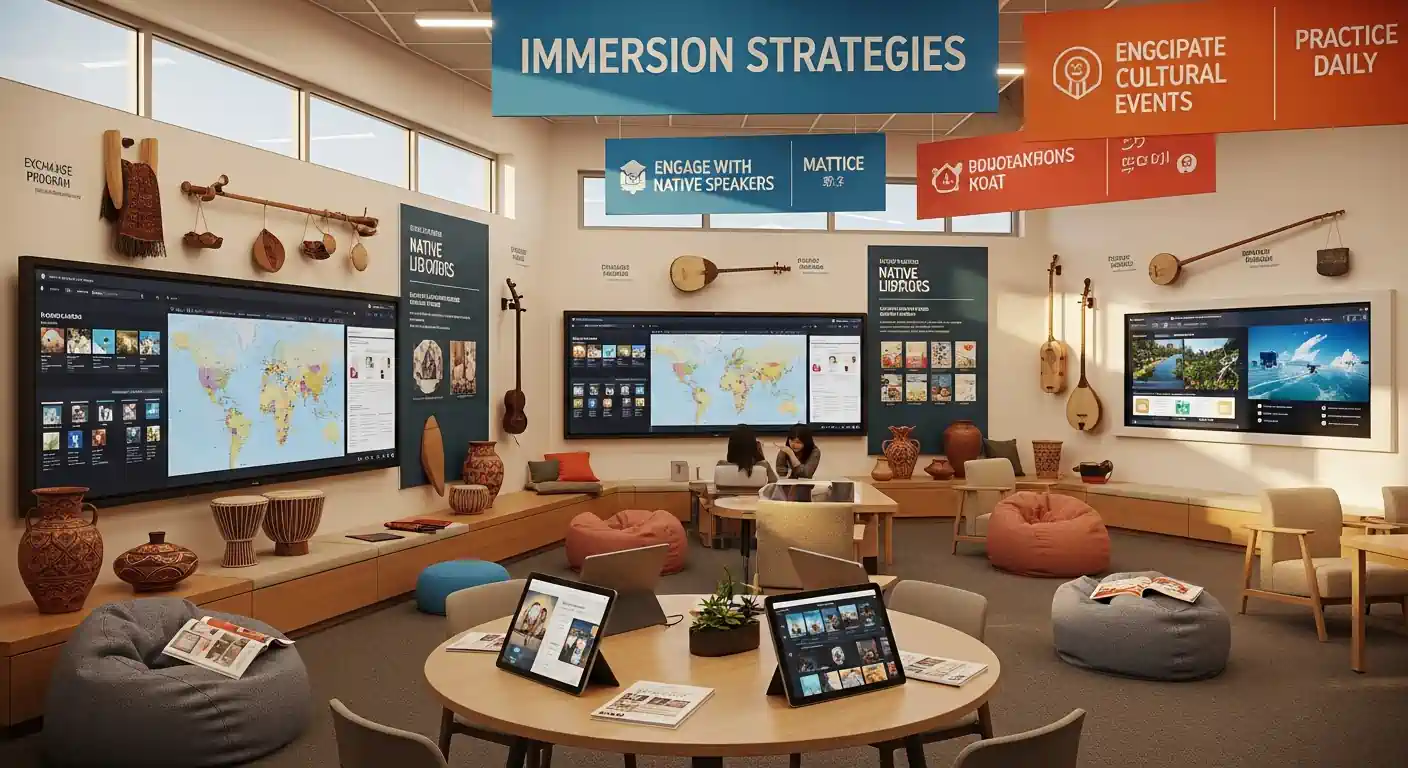
## Step 6: Immersing Yourself in the Culture

Language is intrinsically linked to culture. Understanding the cultural context enriches your learning experience and makes the language more meaningful.

### Cultural Nuances and Etiquette

Learning about cultural norms, social etiquette, and common expressions that are culturally specific can prevent misunderstandings and foster better relationships with native speakers.

### Engaging with Media and Arts

Watch films, listen to music, explore art, and read literature from the target culture. This not only exposes you to authentic language but also provides insights into the way people think and express themselves.

## Differentiated Value: Leveraging Technology and Data for Faster Acquisition

The landscape of language learning is constantly evolving. Leveraging modern technology and data-driven insights can significantly accelerate your progress in *practical language acquisition*.

### AI-Powered Learning Tools

Recent advancements in AI offer personalized learning experiences. AI tutors can provide instant feedback on pronunciation and grammar, adapt lesson difficulty based on your performance, and even generate custom practice scenarios. For instance, a study published by the Language Learning Technology Journal in 2025 indicated that learners using AI-driven feedback systems showed a 20% improvement in speaking accuracy within three months compared to traditional methods.

### Spaced Repetition Systems (SRS)

Tools like Anki or Quizlet utilize SRS to optimize vocabulary and grammar review. They schedule learning material at increasing intervals as you demonstrate mastery, ensuring that information moves from your short-term to your long-term memory efficiently. This is a scientifically backed method for long-term retention, crucial for any *step-by-step approach for learners*.

## Maintaining Momentum and Overcoming Plateaus

Language learning is a marathon, not a sprint. Maintaining motivation and finding strategies to overcome inevitable plateaus are key to long-term success.

### Celebrate Milestones

Acknowledge your progress, no matter how small. Being able to order coffee, understand a snippet of a conversation, or write a coherent sentence are all victories worth celebrating.

### Vary Your Learning Methods

If you feel stuck, change your approach. Try a new app, read a different genre of book, watch a new type of show, or focus on a different skill for a while. Novelty can reignite your enthusiasm.

### Seek Challenges

Push yourself slightly outside your comfort zone regularly. This could mean trying to speak with a native speaker on a more complex topic or tackling a more challenging reading text.

## Frequently Asked Questions (FAQ)

**Q1: How long does it take to become fluent in a new language?**
A1: Fluency is subjective, but generally, reaching conversational proficiency in a language similar to your own can take 600-750 hours of dedicated study and practice. This varies greatly based on the language, your learning methods, and the time you commit.

**Q2: Should I focus on grammar or vocabulary first?**
A2: For practical language acquisition, it's best to focus on both concurrently. Start with high-frequency vocabulary and essential phrases, then integrate foundational grammar within those contexts. Learning vocabulary without grammar limits your ability to form sentences, while grammar without vocabulary leaves you with nothing to say.

**Q3: How can I improve my pronunciation if I don't live in a country where the language is spoken?**
A3: Utilize resources like pronunciation guides, phonetic charts, and language learning apps with speech recognition technology. Listen to native speakers extensively through podcasts, videos, and music, and practice mimicking their sounds and intonation. Recording yourself and comparing it to native audio is also highly effective.

**Q4: Is it possible to learn a language effectively online?**
A4: Absolutely. The internet offers a wealth of resources, including online courses, language exchange platforms, apps, and digital media. Combining these with a structured, disciplined approach allows for highly effective language learning from anywhere in the world.

## Conclusion: Your Personalized Path to Fluency

*Practical language acquisition* is an empowering journey that rewards dedication and strategic effort. By adopting these step-by-step approaches, focusing on active engagement, and embracing the learning process with patience and persistence, you can unlock the doors to a new language and culture. Remember to set realistic goals, celebrate your achievements, and never be afraid to speak, even if it's not perfect. Your ability to communicate will grow with every interaction.

For those looking to deepen their understanding of how languages work and how to master them, exploring further articles on *grammar mastery techniques* and *language learning strategies* is highly recommended.

What are your biggest challenges in learning a new language? Share your thoughts and tips in the comments below! If you found this guide helpful, please share it with fellow language enthusiasts and consider subscribing for more insights into effective language learning.