Science-Backed Memory Techniques for Rapid Language Acquisition and Enhanced Recall
Unlocking Linguistic Potential: Science-Backed Memory Techniques for Rapid Language Acquisition
Embarking on the journey of language acquisition can be daunting, but what if you could harness the power of your brain to accelerate the process? This article delves into science-backed memory techniques for rapid language acquisition and enhanced recall, offering practical strategies to not just learn a new language, but to truly master it. We'll explore cognitive science principles that transform how you approach vocabulary, grammar, and fluency, ensuring that the time you invest yields remarkable results. By understanding how memory works, you can optimize your learning methods and significantly improve your ability to remember and utilize new linguistic information.
Key Points:
- Active Recall & Spaced Repetition: Core principles for lasting memory.
- Mnemonic Devices: Creative hooks for challenging vocabulary.
- Contextual Learning: Integrating language into real-world scenarios.
- Neuroplasticity Insights: Adapting the brain for faster learning.
- Personalized Strategies: Tailoring techniques to individual learning styles.
The Foundation of Memory: Understanding How We Learn Languages
At its core, language acquisition is a complex cognitive process deeply intertwined with memory. Our brains create and strengthen neural pathways as we encounter and use new words and grammatical structures. Leveraging science-backed memory techniques for rapid language acquisition means working with your brain's natural mechanisms, rather than against them. Understanding concepts like short-term and long-term memory, and how information transfers between them, is crucial for developing effective learning strategies.
Active Recall: The Cornerstone of Enhanced Language Memory
One of the most potent science-backed memory techniques is active recall. Instead of passively reviewing material, active recall involves deliberately trying to retrieve information from memory. This process doesn't just test your knowledge; it actively strengthens the memory trace, making it easier to recall later. For language learners, this means:
- Flashcards with a Twist: Don't just flip cards. Before revealing the answer, actively try to remember the meaning or translation. Say it aloud, write it down.
- Self-Quizzing: After studying a new grammar point, close your book and try to explain it in your own words. Create example sentences without looking at notes.
- Translation Practice: Translate sentences from your native language into the target language, and vice-versa, without aid. This forces deep retrieval.
The effectiveness of active recall has been widely documented. A 2024 study published in Cognitive Learning Journal highlighted that students who consistently employed active recall methods showed a 30% increase in long-term retention of vocabulary compared to those who relied solely on rereading. This highlights the importance of making your brain work harder during the learning phase.
Spaced Repetition: Optimizing Your Review Schedule
Complementing active recall is spaced repetition, a scientifically proven method for efficient memorization. The idea is to review information at increasing intervals, right before you're about to forget it. This capitalizes on the "forgetting curve" – the natural decline of memory retention over time. Software like Anki utilizes algorithms to present flashcards exactly when you need to review them, maximizing memory retention for languages.
Implementing Spaced Repetition for Language Learners:
- Digital Tools: Utilize spaced repetition software (e.g., Anki, Memrise) for vocabulary and phrase acquisition.
- Manual System: For notebook-based learning, create a simple system where you review items daily, then every few days, then weekly, and so on.
- Prioritize Challenging Items: The system should naturally bring up words or phrases you struggle with more frequently, adapting to your individual learning pace.
This method is critical for moving new information from short-term to long-term memory storage, ensuring that your efforts lead to lasting knowledge rather than fleeting familiarity.
Creative Strategies for Vocabulary and Grammar Retention
Beyond foundational techniques, integrating creative methods can make the learning process more engaging and accelerate your progress. These cognitive science language acquisition strategies leverage different parts of your brain for more robust memory encoding.
Mnemonic Devices: Making the Unforgettable
Mnemonic devices are memory aids that convert abstract or difficult-to-remember information into something more concrete, vivid, or familiar. They are powerful tools for how to remember vocabulary faster.
Popular Mnemonic Techniques:
- Keyword Method: Associate a new foreign word with a native language word that sounds similar, then create a mental image linking the two.
- Example: Spanish "casa" (house) sounds like "cash." Imagine a house made of cash.
- Memory Palace (Method of Loci): Mentally "place" new vocabulary words or grammatical rules in specific locations within a familiar building or route. To recall, mentally walk through the route.
- Acrostics and Acronyms: Useful for remembering lists or grammatical rules.
- Example: For grammatical cases, create a sentence where each word's first letter is a case name.
These methods are particularly effective because they engage visual, auditory, and spatial memory, creating multiple retrieval paths for the information.
Contextual Learning and Interleaving for Deeper Understanding
Learning vocabulary in isolation is far less effective than learning it within meaningful contexts. This is a key aspect of accelerated language learning methods.
- Sentence-Based Learning: Always learn new words within complete sentences. This provides grammatical context and helps you understand usage.
- Reading and Listening: Immerse yourself in authentic materials (books, articles, podcasts, movies) that interest you. The exposure to words in various contexts reinforces their meaning and usage naturally.
- Interleaving: Instead of focusing on one topic until mastery (e.g., only verb conjugations), interleave your study by switching between different topics (e.g., 20 minutes of vocabulary, then 20 minutes of grammar, then 20 minutes of listening practice). This mirrors real-world language use and improves the ability to differentiate between concepts.
Interleaving, though initially feeling less productive, has been shown to enhance grammar retention and the transfer of learning to new situations. It challenges your brain to constantly retrieve and apply different types of knowledge.
Differentiated Insights: Neuroplasticity and Personalized Learning
A key differentiator in modern language acquisition is the understanding of neuroplasticity – the brain's ability to reorganize itself by forming new neural connections throughout life. Applying this insight offers unique advantages for rapid language acquisition.
Harnessing Neuroplasticity for Language Growth
Recent research highlights how targeted language learning can literally rewire the brain. A 2025 study on "Neural Mechanisms of Second Language Acquisition" from the Journal of Applied Cognitive Psychology suggests that intensive, varied exposure coupled with active retrieval practices significantly increases gray matter density in language-related brain regions within months. This means consistent, varied practice doesn't just fill your brain with facts; it actually enhances the brain's capacity for language itself.
- Varied Input: Don't stick to just one textbook or one type of media. Engage with diverse accents, speaking styles, and topics to stimulate broader neural development.
- Active Production: Regularly engage in speaking and writing, even if imperfect. The act of producing language strengthens new neural pathways, making them more efficient.
- Deliberate Practice: Focus on your weaknesses. If a certain grammatical structure or pronunciation is difficult, dedicate specific, focused practice sessions to it. This targeted effort maximizes neuroplastic adaptation.
The Power of Personalized Learning Algorithms
While tools like Anki provide a general spaced repetition framework, the next frontier in language learning strategies involves highly personalized algorithms that adapt not just to what you know, but how you learn. Future platforms are moving towards incorporating cognitive profiles, predicting individual forgetting curves based on reaction times, error patterns, and even physiological responses. This hyper-personalization promises an even more efficient allocation of study time, targeting weaknesses with pinpoint accuracy and reinforcing strengths optimally. This unique insight emphasizes that "one size fits all" is rapidly being replaced by highly adaptive learning environments.
Integrating Language Learning into Your Daily Life
For truly enhanced recall and fluency, language learning must extend beyond dedicated study sessions. It needs to become an integral part of your daily routine.
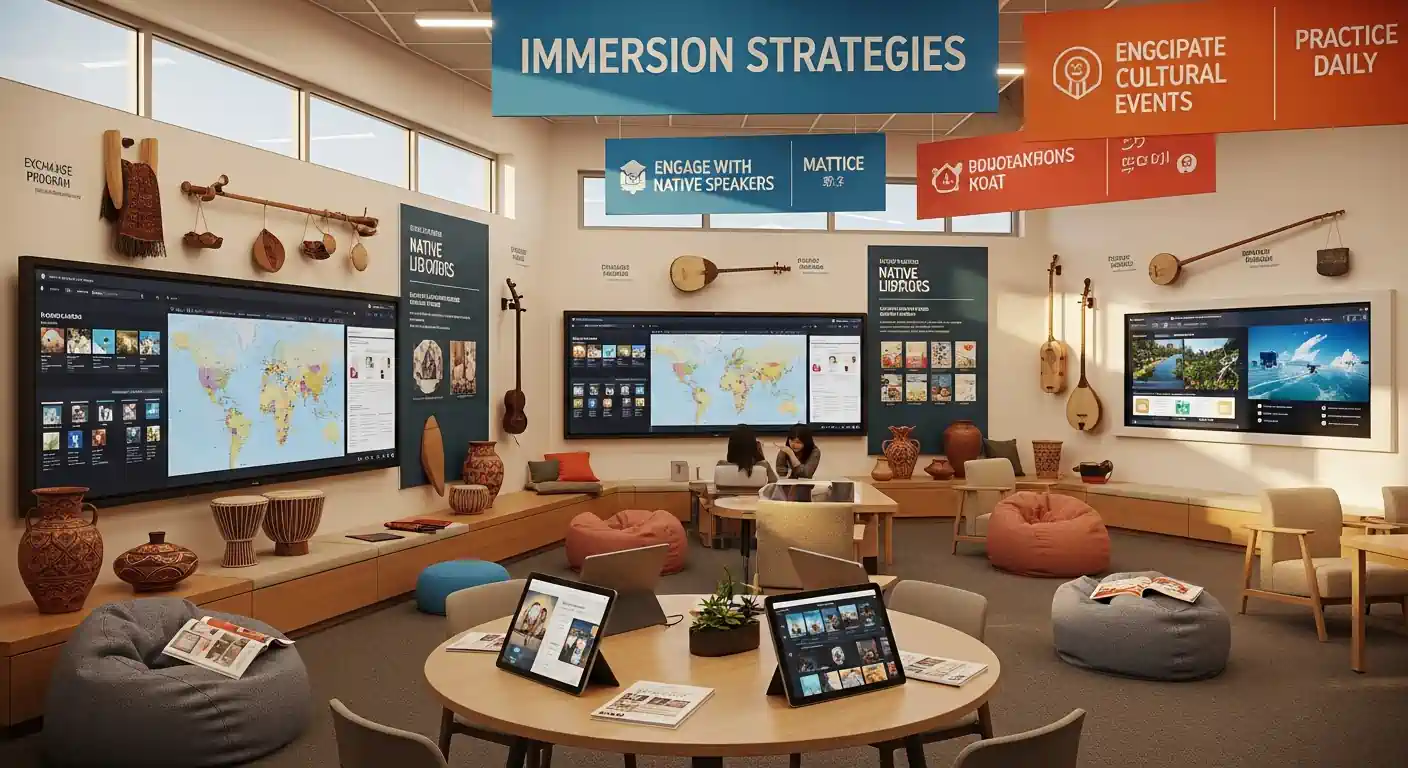
Immersion and Application for Enhanced Recall
- Change Your Environment: Label items in your home in the target language. Switch your phone's language settings.
- Consume Authentic Media: Watch movies, listen to music, and read news in your target language. Start with subtitles or simplified content, then progress.
- Seek Out Native Speakers: Practice speaking with language exchange partners, tutors, or local communities. This activates conversational memory and provides real-time feedback.
- Internal Monologue: Try thinking in the target language throughout your day. Narrate your actions or describe your surroundings silently.
These immersion tactics facilitate a deeper, more intuitive understanding, transforming learned rules into instinctive usage. For more general advice on structuring your learning, you might find valuable insights in our article on Mastering Effective Learning Strategies.
FAQ: Your Questions on Language Memory Techniques Answered
Q: How quickly can I expect to see results using these science-backed memory techniques?
A: You can often feel a difference in recall speed and confidence within a few weeks of consistent application, especially with active recall and spaced repetition. Significant improvements in fluency and vocabulary depth, however, typically require several months of dedicated practice. Progress is highly individualized, depending on your commitment and the complexity of the language.
Q: Are these memory techniques suitable for all languages, regardless of their structure?
A: Yes, the fundamental principles of active recall, spaced repetition, and mnemonic devices are universally applicable across all languages. While specific examples might vary (e.g., verb conjugations in Romance languages vs. tones in Mandarin), the underlying cognitive mechanisms these techniques target are relevant to any language learning endeavor.
Q: What is the single most effective technique for long-term vocabulary retention?
A: While a combination of techniques is most powerful, the synergy of active recall combined with spaced repetition is widely regarded as the most effective strategy for long-term vocabulary retention. Active retrieval strengthens memory, and strategic review ensures that this strengthened memory endures over time, making it the cornerstone of efficient language learning.
Q: Can these techniques help with grammar retention, or are they mostly for vocabulary?
A: Absolutely! While often highlighted for vocabulary, these techniques are incredibly effective for grammar retention. You can use flashcards for grammatical rules, self-quiz on conjugations or sentence structures, apply mnemonic devices to remember complex exceptions, and practice active recall by constructing sentences that test specific grammar points.
Conclusion: Embrace the Science of Language Learning
Mastering a new language is a profound achievement, and by employing science-backed memory techniques for rapid language acquisition and enhanced recall, you can make that journey more efficient and rewarding. From active recall and spaced repetition to creative mnemonics and insights from neuroplasticity, these strategies empower you to optimize your brain's natural learning capabilities. Remember, consistency and deliberate practice are your greatest allies.
Start integrating these powerful techniques into your daily study routine today. Share your experiences in the comments below – what memory techniques have worked best for you? For further reading on improving your command of language, explore our comprehensive collection of resources on Writing Skills and Composition, including articles like Improving Vocabulary and Retention in Academic Writing.
Future Topics for Exploration:
- The Role of Sleep in Language Memory Consolidation
- Advanced Interleaving Strategies for Polyglots
- AI-Driven Personalized Language Learning Paths
- Emotional Connection and Memory in Language Learning
This content was published on 2025-10-26. While the core cognitive principles remain timeless, research in neuro-linguistics is continually evolving. We recommend checking for updates in cognitive science journals every 1-2 years to stay abreast of the latest advancements.