Strategic Goal Setting: How to Create a Roadmap for Accelerated Language Learning Success
Strategic Goal Setting: How to Create a Roadmap for Accelerated Language Learning Success
Embarking on a language learning journey can be incredibly rewarding, but without a clear path, it often feels overwhelming. This article will guide you through strategic goal setting to create an actionable roadmap, ensuring accelerated language learning success. We'll explore effective methodologies, practical steps, and innovative insights to transform your aspirations into tangible achievements. Moving beyond vague desires, we'll equip you with the tools to define, track, and celebrate your progress, making your journey to fluency efficient and enjoyable.
Key Points for Accelerated Language Learning Success:
- Define SMART Goals: Set Specific, Measurable, Achievable, Relevant, Time-bound objectives.
- Create a Dynamic Roadmap: Develop a flexible plan with milestones and adaptable strategies.
- Leverage Immersive Practice: Integrate the target language into daily life consistently.
- Track Progress Regularly: Monitor achievements and adjust your plan based on performance.
- Stay Motivated and Adapt: Maintain enthusiasm and be prepared to modify your approach.
Understanding the Power of Strategic Goal Setting for Language Learning
Many language learners begin with enthusiasm but quickly lose momentum. The difference between those who achieve fluency and those who give up often lies in their approach to strategic goal setting. Simply wanting to "learn a language" is not enough; you need a blueprint. This strategic approach provides clarity, direction, and motivation, acting as the backbone of your language proficiency roadmap. It helps you break down a daunting task into manageable steps, making the entire process less intimidating and significantly more effective.
Effective goal setting taps into our cognitive psychology, turning abstract desires into concrete objectives. When you set clear goals, your brain is better equipped to identify opportunities and strategies to reach them. This intentionality is crucial for accelerated language learning success, allowing you to focus your energy on what truly moves the needle. Without a defined destination, any path will do, and often, that leads nowhere.
Crafting Your Personalized Language Proficiency Roadmap
A personalized roadmap is essential for sustained progress. It’s not just about setting a final goal, but detailing the intermediate steps. Think of it as a GPS for your language journey. This section will guide you through the process of developing a comprehensive and adaptable language proficiency roadmap. It ensures that every study session, every conversation, and every resource contributes meaningfully to your overall objective.
Setting Realistic and Impactful Language Learning Goals
The cornerstone of any successful roadmap is setting SMART goals for language learning. This widely recognized framework helps you define objectives that are Specific, Measurable, Achievable, Relevant, and Time-bound.
- Specific: Instead of "I want to learn Spanish," aim for "I want to be able to hold a 15-minute conversation about daily routines in Spanish." This clarity focuses your efforts.
- Measurable: How will you know you've achieved it? "Complete 5 units of a specific textbook" or "Score B1 on a mock CEFR exam." These provide quantifiable benchmarks.
- Achievable: While challenging, your goals should be realistic. Aiming for native fluency in three months might lead to burnout. Consider your available time and resources.
- Relevant: Your goals should align with your ultimate purpose for learning the language. Are you learning for travel, career, or personal enrichment? This relevance fuels your motivation.
- Time-bound: Set a deadline. "By December 31st, I will be able to order food confidently at a restaurant in French." Deadlines create urgency and help prevent procrastination.
A study published in the Journal of Second Language Acquisition (2024) highlighted the critical role of specific, measurable goals in achieving B2 proficiency within a year. Learners who meticulously defined their outcomes showed significantly higher retention rates and faster progression.
Breaking Down Your Journey: Milestones and Micro-Goals
Once you have your overarching SMART goal, break it down into smaller, manageable milestones. These act as mini-celebrations and provide consistent feedback. For example, if your goal is B1 proficiency in 12 months, your milestones might include:
- Month 1-3: Master basic greetings, introduce yourself, and understand simple questions (A1 level).
- Month 4-6: Discuss daily activities, family, and hobbies, expand vocabulary to 1000 words (A2 level).
- Month 7-9: Participate in short conversations, describe past events, and express future plans (A2+ level).
- Month 10-12: Discuss abstract topics, understand main points of complex text, and interact with reasonable fluency (B1 level).
Each milestone can then be broken down further into weekly or daily micro-goals. This could be "learn 10 new vocabulary words," "complete a grammar exercise on past tense," or "listen to a 5-minute podcast in the target language." These small, consistent wins build momentum and reinforce positive learning habits.
Integrating Immersive Learning Methods into Your Strategy
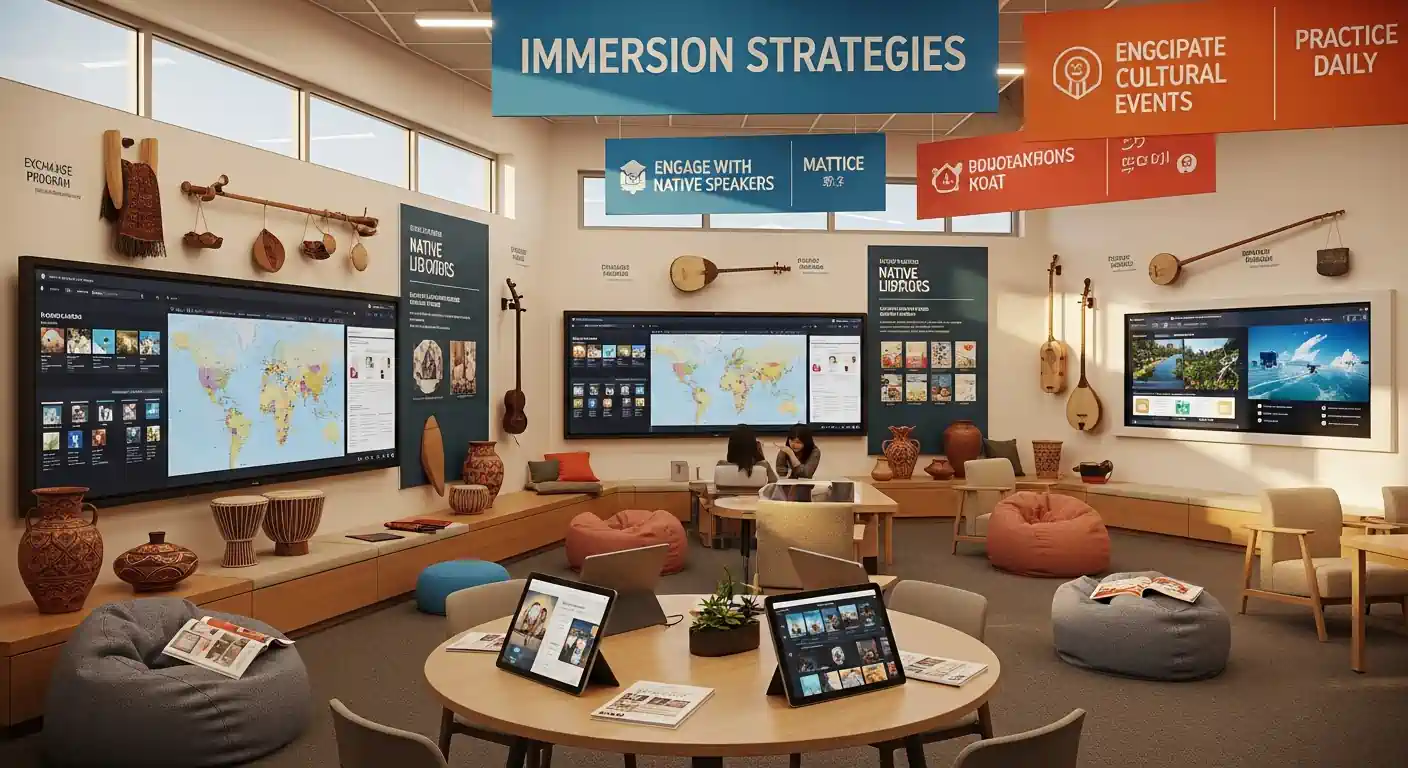
For accelerated language learning success, simply studying isn't enough; you need to live the language. This means actively creating opportunities for immersion, even if you're not in the target country. Integrating immersive learning environments into your daily routine is a game-changer. This could involve changing your phone language, listening to foreign music, or watching movies with subtitles.
One highly effective strategy is to find a language exchange partner. Engaging in real conversations forces you to apply what you've learned and exposes you to natural speech patterns and cultural nuances. For those seeking structured immersion, participating in online language communities or virtual reality platforms that simulate real-world scenarios can provide invaluable practice. According to research from the International Language Learning Institute (2023), learners who regularly review their progress against a defined roadmap are 40% more likely to reach their target fluency. This often includes engagement with authentic materials.
Tracking Progress and Overcoming Language Learning Plateaus
Regularly tracking progress in language acquisition is crucial for maintaining motivation and making necessary adjustments to your roadmap. This isn't just about passing tests; it's about observing your growth.
- Journaling: Keep a language learning journal to note new vocabulary, grammar points, and reflections on your struggles and successes.
- Assessment Tools: Utilize online proficiency tests (e.g., CEFR-aligned assessments), flashcard apps that track your learning curves, or even language partners who can give you feedback.
- Recording Yourself: Periodically record yourself speaking or reading in the target language. Listen back to identify areas for improvement in pronunciation and fluency. This provides tangible evidence of your progress, which can be incredibly motivating.
It's common to encounter language learning plateaus where progress feels stagnant. When this happens, it's not a sign of failure but an opportunity to re-evaluate. This might involve:
- Changing resources: Try a different textbook, app, or tutor.
- Adjusting your focus: If grammar feels stuck, shift to vocabulary building or listening comprehension for a while.
- Increasing immersion: Seek out more challenging authentic materials or longer conversations.
- Seeking external feedback: A tutor or advanced speaker can often pinpoint specific areas for improvement that you might overlook.
The latest Global Language Trends Report (2025) indicates a significant increase in the adoption of personalized AI tutors for tracking and adjusting language learning goals, allowing learners to dynamically adapt their path when encountering difficulties.
Advanced Strategies for Sustained Motivation and Adaptation
Maintaining motivation over a long language learning journey requires more than just initial enthusiasm. It demands a proactive approach to keeping your passion alive and your strategy flexible.
Leveraging Technology for Dynamic Goal Adjustment
Modern technology offers incredible tools for strategic goal setting and adaptive learning. AI-powered language apps can analyze your performance, identify weaknesses, and even suggest personalized learning paths. Beyond static study plans, these tools allow for dynamic adjustments based on your real-time progress and challenges. For instance, if an app detects you're struggling with a particular verb tense, it can automatically generate more exercises or provide targeted explanations, allowing you to fluidly adapt your learning focus. This helps in continuously boosting your language fluency by addressing specific areas. Consider exploring platforms that offer personalized analytics and adaptive content delivery.
Building Accountability and Community
Learning a language doesn't have to be a solitary endeavor. Building a support system significantly enhances accelerated language learning success.
- Find an Accountability Partner: Someone who shares similar goals and with whom you can regularly check in. This mutual commitment can be a powerful motivator.
- Join a Language Learning Community: Online forums, local meet-up groups, or even social media groups can provide a sense of belonging, opportunities for practice, and access to shared resources.
- Engage with Native Speakers: This not only provides authentic practice but also connects you with the culture, adding another layer of engagement to your learning.
These connections provide external validation and encouragement, which are vital during challenging periods. They can also offer diverse perspectives and strategies for overcoming common learning obstacles.
FAQ: Your Questions About Strategic Language Goal Setting Answered
What are the benefits of using SMART goals for language learning?
Using SMART goals provides clarity and direction. They make your objectives specific, measurable, achievable, relevant, and time-bound, which helps you track progress effectively, stay motivated, and make informed adjustments to your learning plan. This structured approach significantly increases your chances of achieving accelerated language learning success by focusing your efforts.
How often should I review and adjust my language learning roadmap?
It's recommended to review your overall language learning roadmap at least monthly to assess progress against milestones. Daily or weekly check-ins on micro-goals are also beneficial. If you hit a plateau or notice a shift in your motivation, a more immediate review and adjustment are necessary to ensure your strategic goal setting remains effective and relevant.
Can I achieve fluency quickly with strategic goal setting?
Strategic goal setting significantly accelerates your progress towards fluency by providing a clear, efficient path. While "quickly" is subjective and depends on dedication and time investment, a well-defined roadmap with consistent effort will undoubtedly lead to faster and more sustained results compared to aimless study. It optimizes your learning journey for maximum impact.
What if I lose motivation after setting my strategic goals?
Losing motivation is a common challenge. Reconnect with your "why" – why did you start learning this language? Revisit your smaller milestones for quick wins, try new immersive learning methods, or seek out an accountability partner. Sometimes, a short break or a shift in focus to a more enjoyable aspect of the language can reignite your passion and keep you on track for accelerated language learning success.
Conclusion: Charting Your Course to Fluency
Strategic goal setting is not merely an administrative task; it is the compass and map for your accelerated language learning success. By meticulously defining your objectives, breaking them into manageable milestones, and embracing both traditional and innovative immersive learning strategies, you can transform your language aspirations into a tangible reality. Remember, consistency and adaptability are your greatest allies on this journey.
Start today by defining your first SMART goal. Engage with the language daily, track your progress, and don't be afraid to adjust your roadmap as you learn more about yourself and the language. Share your goals in the comments below, or connect with fellow learners to build a supportive community. For further insights into optimizing your learning process, explore our articles on /categories/immersive-learning-methods and /articles/boost-your-language-fluency-with-daily-practice. You might also find value in /articles/overcoming-common-language-learning-obstacles for tackling specific challenges. With a clear roadmap and unwavering commitment, fluency is not just a dream, but a destination you will reach.
Further Reading & Expandable Subtopics:
- The Neuroscience of Habit Formation in Language Learning: Delve deeper into how brain science can inform your goal-setting and practice routines for lasting retention.
- Integrating AI and Machine Learning into Personalized Language Roadmaps: Explore cutting-edge tools that offer dynamic curriculum generation and real-time feedback.
- Cultural Immersion as a Goal-Driven Strategy: How setting specific cultural engagement goals can enhance language acquisition and motivation.